
-
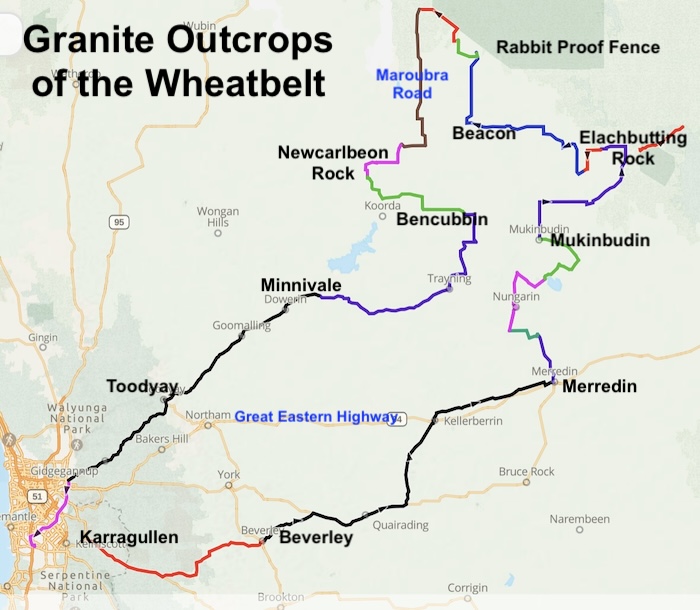
- ROUTE OF THE GRANITE OUTCROPS OF THE WHEATBELT ROAD TRIP
Day 1
The first job after rendezvousing at Karragullen was to adjust the wheel bearings on the trailer.
-
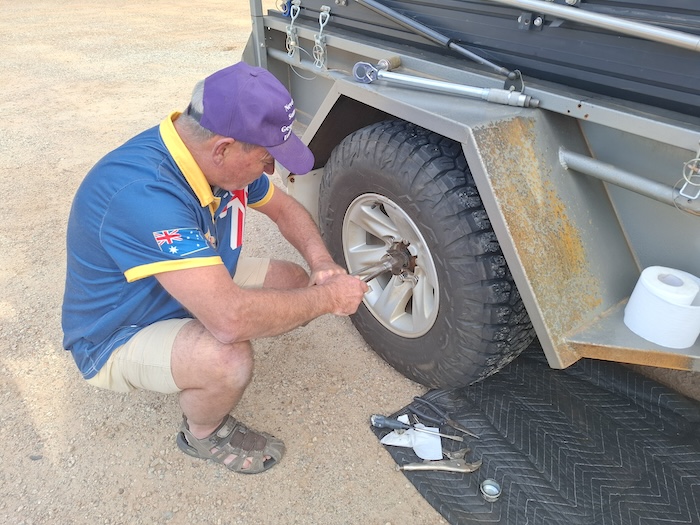
- Rod tightens the wheel bearings on Kim’s trailer.
We drove east out of Karragullen on the Brookton Highway, turning off at Westdale, headed for Beverley and then onto Quairading. .Eleven kilometres out of Quairading is the Pink/Blue Lake. One never knows what colour it will be. On occasions one side of the road has a pink hue and the other side is blue.
-
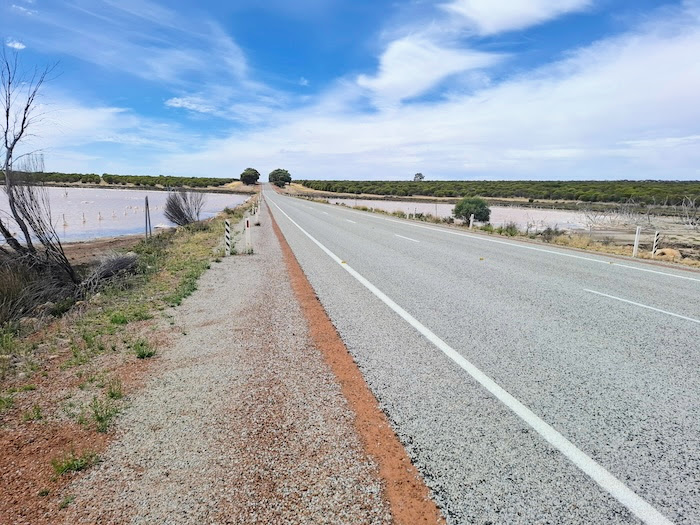
- The lake east of Quairading had a pink hue on this occasion.
North of Quairading is one of the most impressive granite outcrops of the Wheatbelt – Mount Stirling.
-
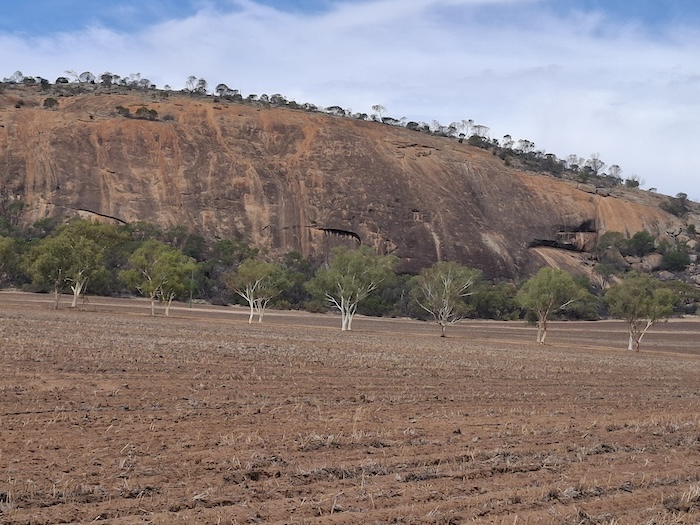
- Mount Stirling – named after the first Governor of Western Australia.
Our journey took us north to Kellerberrin on the Great Eastern Highway and then a bit further north to Goldfields Road and the inaptly named Shark Mouth Rock – hereafter referred to as Happy Dolphin Rock.
-
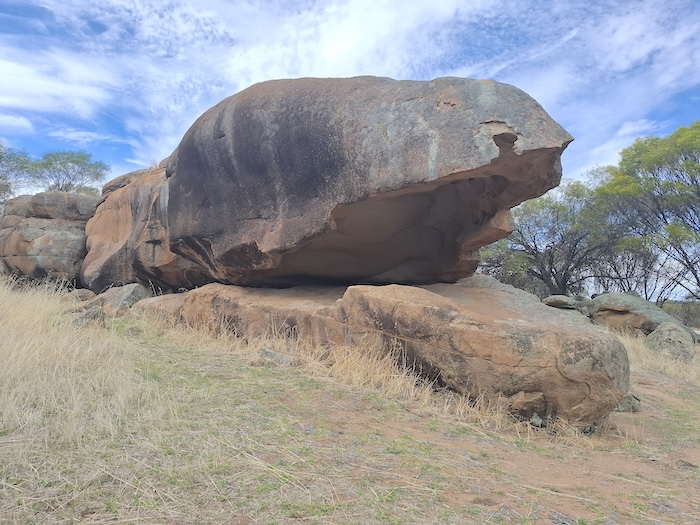
- Happy Dolphin Rock.
The Goldfields Road leads to Merredin. On the way we stopped at Doodlakine Well.
-
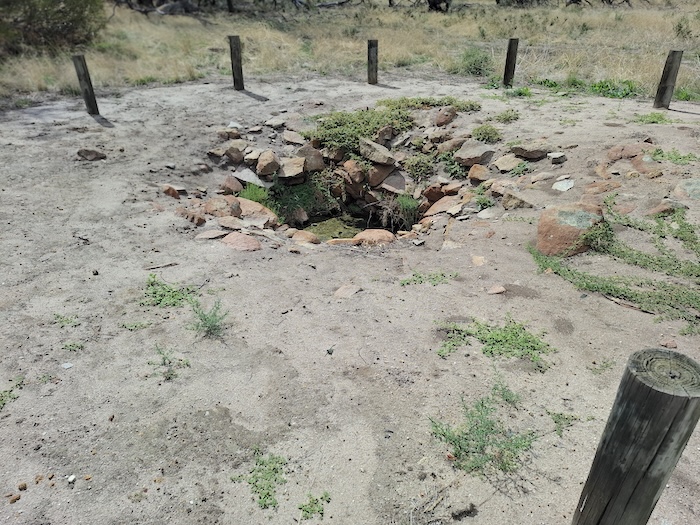
- C.C. Hunt’s Doodlakine Well in 2026. It is in reasonable condition.
We headed north from Merredin, checked out some possible campsites at Nukarni and then deviated slightly off our direct course to Danberrin Hill to stay the night. This campground is huge. The downside is that it is windy. There are no hills or large stands of trees to provide protection from the easterlies. The wind whistles through, unabated off the desert to the east.
Overnight at Danberrin Hill.
Day 2
Our route took us to Mangowine, an historic homestead north of Nungarin. It was built by Charles and Jane Adams around 1876. The adjacent wayside inn was constructed in 1889. This was the first settlement in the area and was a pivotal point on the Parry Track.
Mangowine has maintained prominence in the Nungarin area as the setting for an annual outdoors music event held under the stars. Mangowine Homestead Concert attracts more than 1000 people and is held in October each year.
-
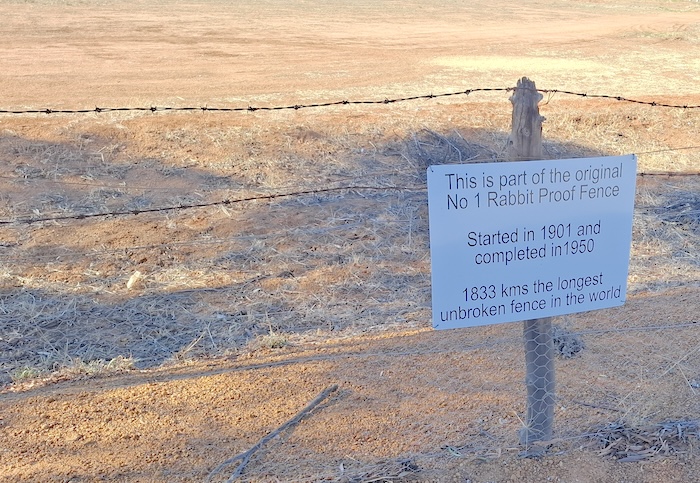
- Part of the Rabbit Froof Fence at Nungarin.
Onward to Nungarin, location of a large Army base during World War II and home to one of the best military museums in Western Australia.
-
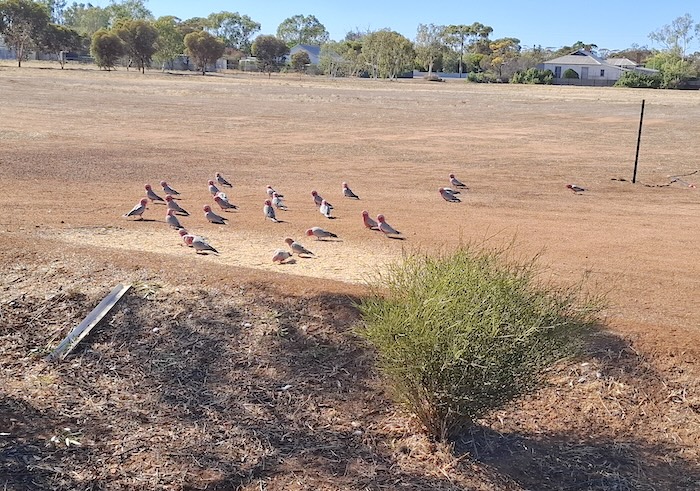
- Pink and grey galahs at Nungarin.
Nungarin Heritage Machinery and Army Museum, is a massive WWII military workshop that includes a rare Dingo scout car, a fascinating 10th Light Horse display and extensive heritage memorabilia. The Sandakan Death March display commemorating the deaths of three brothers from Nungarin is particularly sobering.
-
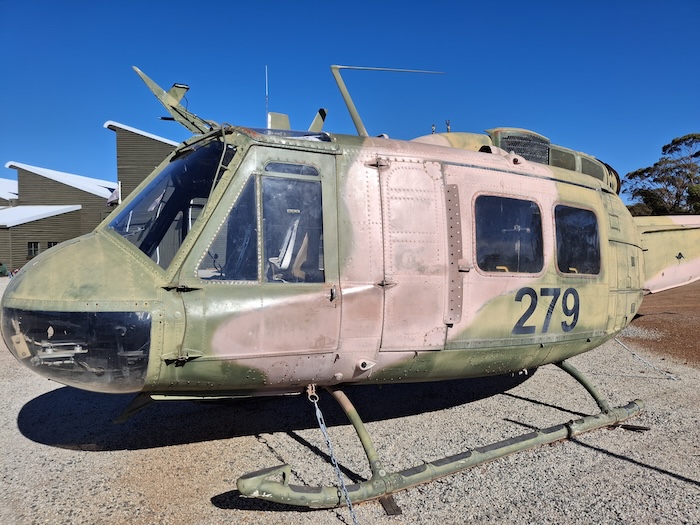
- This ‘Huey’ helicopter is a star exhibit at Nungarin Military Museum. Officially – Bell UH-1H Iroquois, RAAF serial A2-279.
-
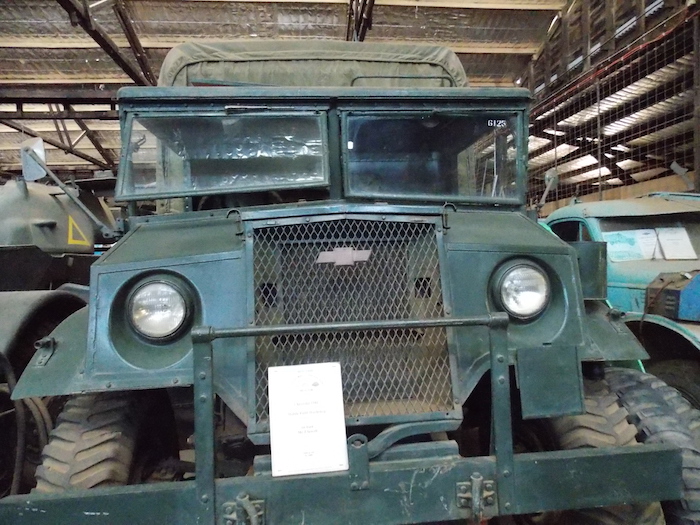
- Blitz truck.
-
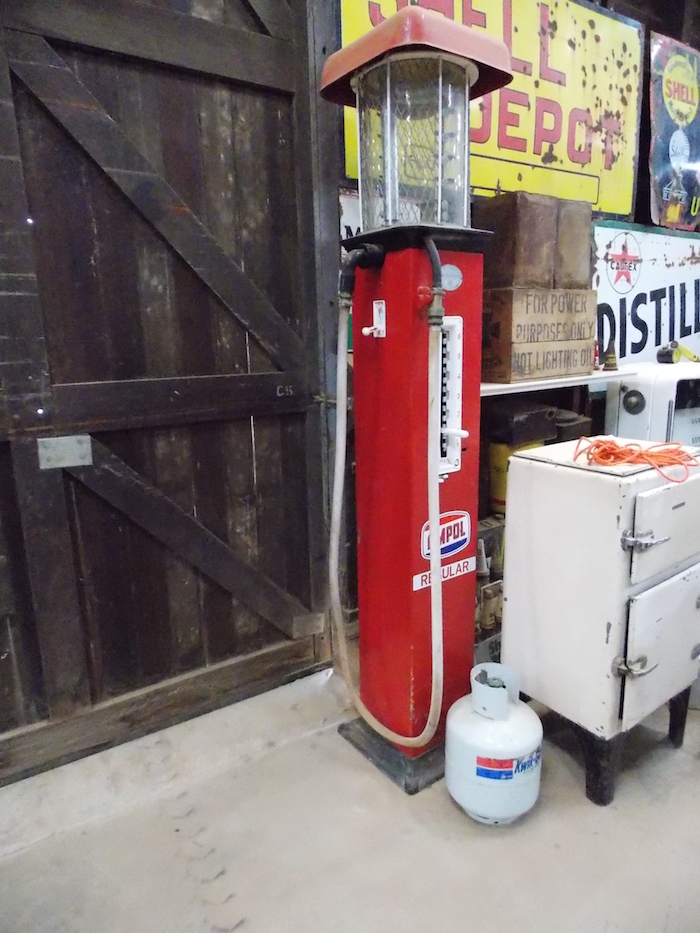
- Old bowser and ice fridge.
Next stop was Eaglestone Rock, one of the highlights of the area. The western face is particularly appealing to serious climbers/abseilers.
-
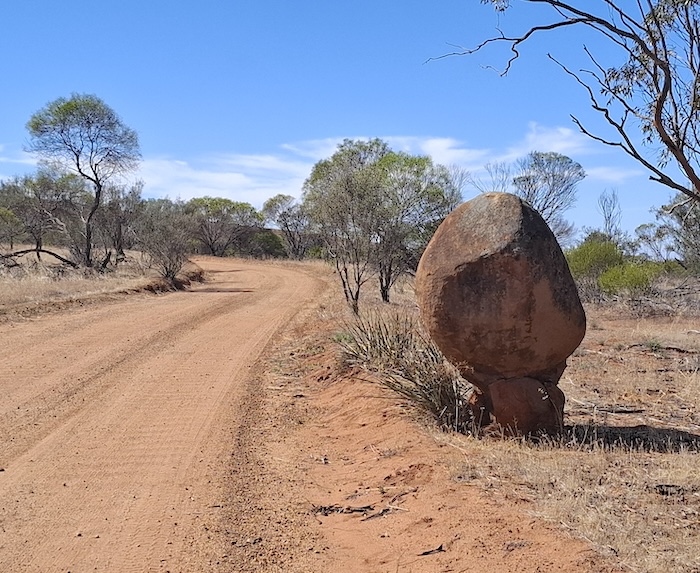
- A balancing rock on the track into Eaglestone Rock.
-
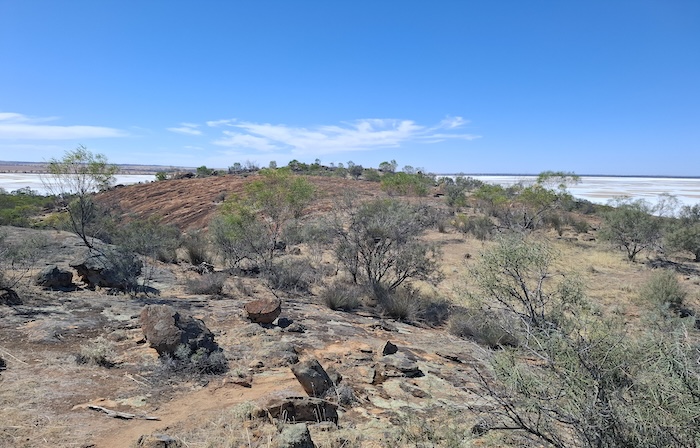
- View from the top of Eaglestone Rock.
-
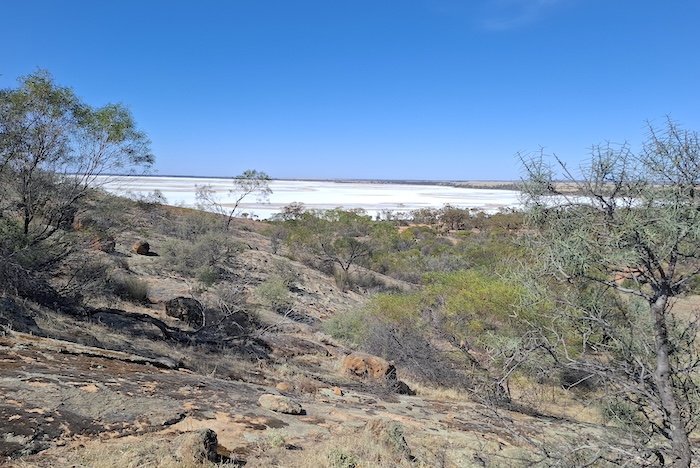
- View of Lake Brown.
Our journey took us into Mukinbudin, arriving only minutes before the local IGA closed for the day. Diesel at Mukinbudin’s card-operated pump was $3.30/litre.
It was too early to camp so we took a trip out Wiera Nature Reserve.
-
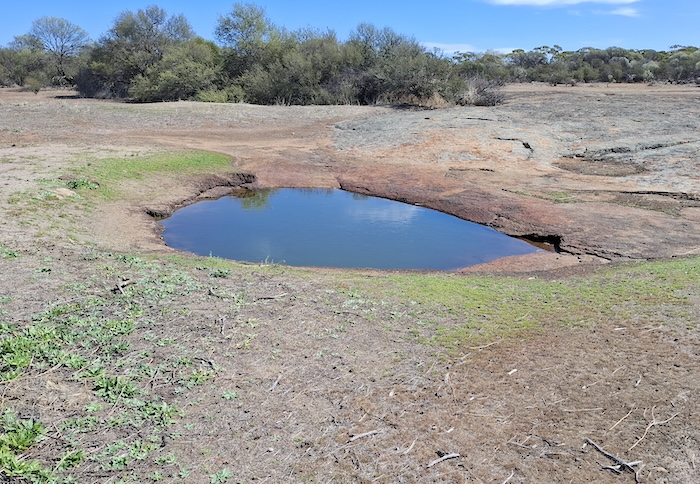
- Weira Gnamma. The directional signpost actually reads ‘Weira Gnamma Hole’, however, the word ‘gnamma’ incorporates the sense of a hole so using ‘hole’ to describe a gnamma is redundant.
Overnight at Mukinbudin Caravan Park. This is one of the best caravan parks in the Wheatbelt — well appointed camp kitchen with an interesting display of historic wool brands and very good ensuites. It is unfortunate that the town has insufficient water to maintain grass in the caravan park. A decision had to be made on water for the footy oval or water for the caravan park. The CP ended up with gravel.
Day 3
With no confirmed overnight destination but plenty of highlights on our to do list we left Muka on the Wialki road, heading north.
First stop was a Cleomine where an interesting example of industrial art commemorates an historic and important farm in the district.
-
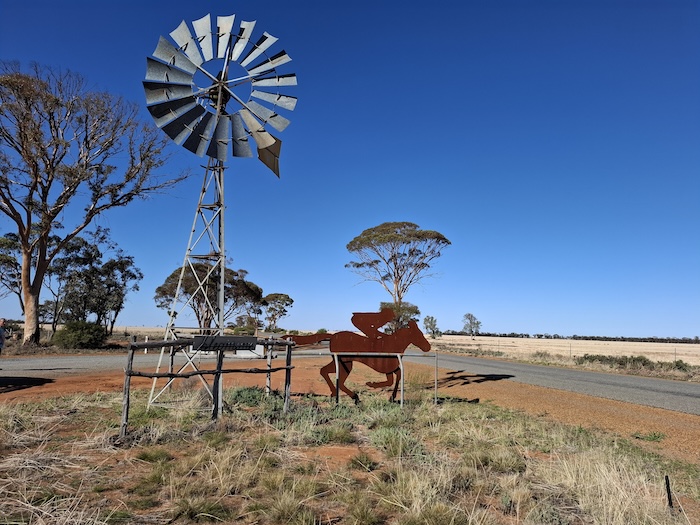
- A windmill-activated metal outline of a horse and jockey north of Mukinbudin commemorates the famous racehorse Cleomine.
George Lansdell, a prominent Perth bookmaker and racehorse owner in the first three decades of the 20th century, built an impressive mudbrick five-roomed homestead at this location. The property was called ‘Cleomine’ after Lansdell’s greatest horse, the 1920’s equal of Black Caviar. George Lansdell spelled his horses on this farm and many trainers, strappers and jockeys came to Cleomine to train, work and rest.
The metal outline of the famous horse and its jockey are activated by the windmill. An usual tribute that virtually guarantees a stop by the curious traveller.
Next stop was Wattoning a short detour to the west of the Wialki Road.
Wattoning
Wattoning is a significant historical settlement. The Historical Site includes wells, the homestead site and soak, gnammas, and a graveyard.
-
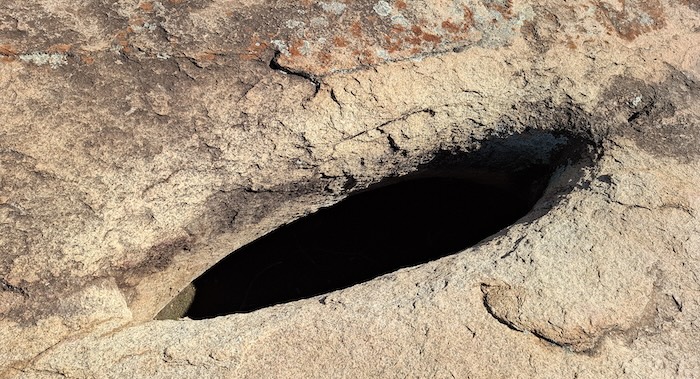
- Gnamma at Wattoning.
The wells at Wattoning were an important watering point on the road to the Mount Jackson goldfields. In 1894 it was noted that there was a splendid road from Yarragin via Wattoning to Mount Jackson past the Wattoning homestead with an abundance of grass, plenty of water in the rocks and permanent water at wells and soaks.
-
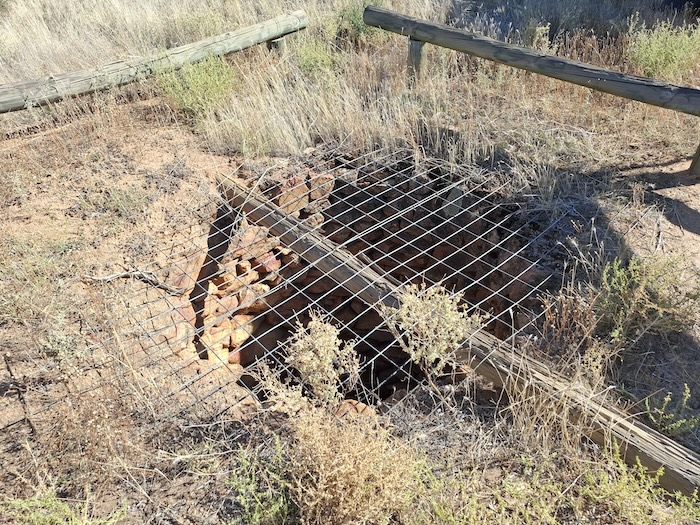
- Well at Wattoning.
We headed east to Wilgoyne and then north (off our track to Elachbutting) for six kilometres to De-Eranning Hill.
De-Eranning
Although De-Eranning is part of the Wheatbelt Way it is not ‘on the way’ to the next destination (it’s an offshoot’) and consequently it is less frequently visited than the more well-known granite outcrops. However, the diversion, if made, is well worth the effort.
A substantial water harvesting system and associated reservoir has been constructed at De-Eranning.
-
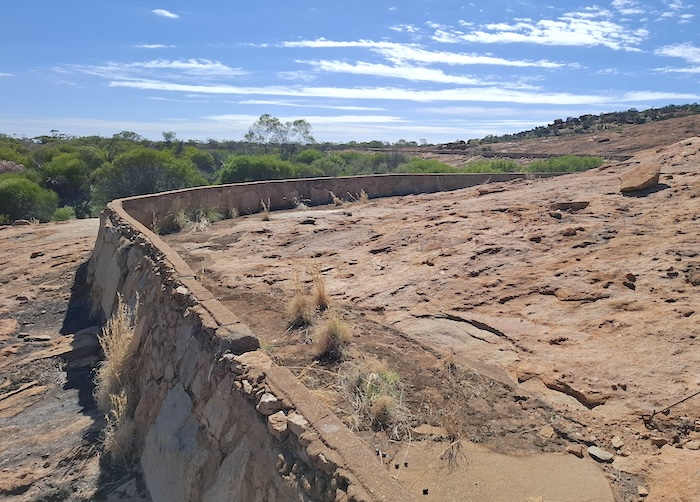
- Harvest wall at De-Eranning.
-
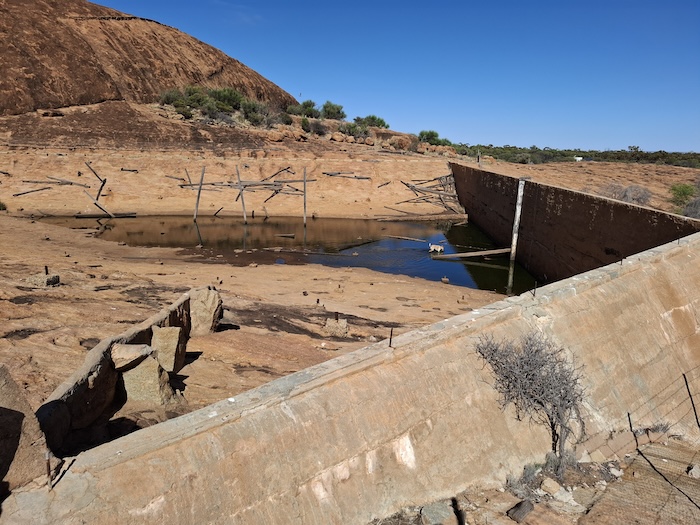
- The reservoir wall at De-Eranning.
The track continues past the reservoir for slightly more than a kilometre to a locked gate. It’s shown on maps as a public road so I suspect it is another case of adverse possession in the making.
-
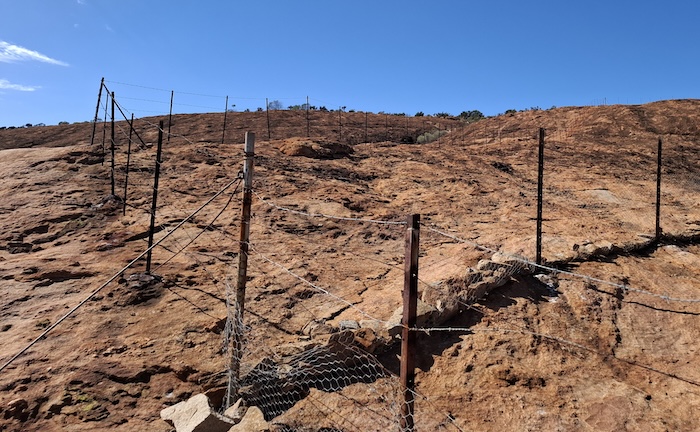
- Ensuring a fence stays upright to keep animals out of the water was no easy task.
Leaving De-Eranning we headed for Yanneymooning Hill.
Yanneymooning Hill
For some inexplicable reason camping is not permitted at this hill. Given the abundance of evidence to the contrary the restriction is clearly ignored. It is a huge area ideally suited as a free campground that would be unaffected by responsible overnight visitation.
-
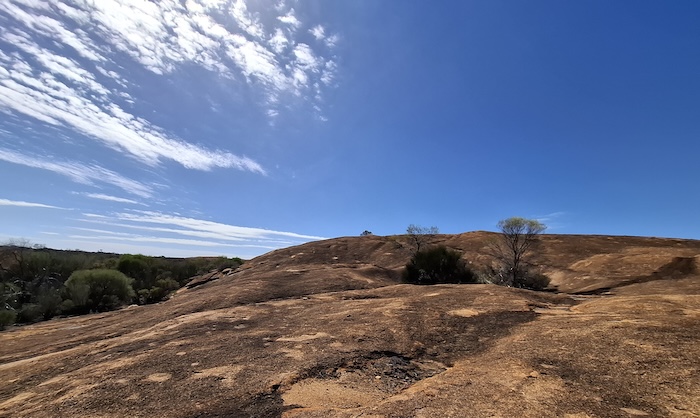
- Yanneymooning Hill is a huge expanse of granite.
-
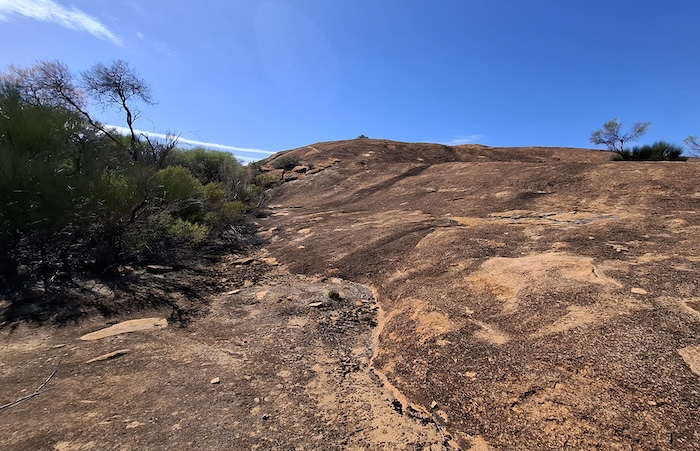
- Little known Yanneymooning Hill is worthy of more visitation.
-
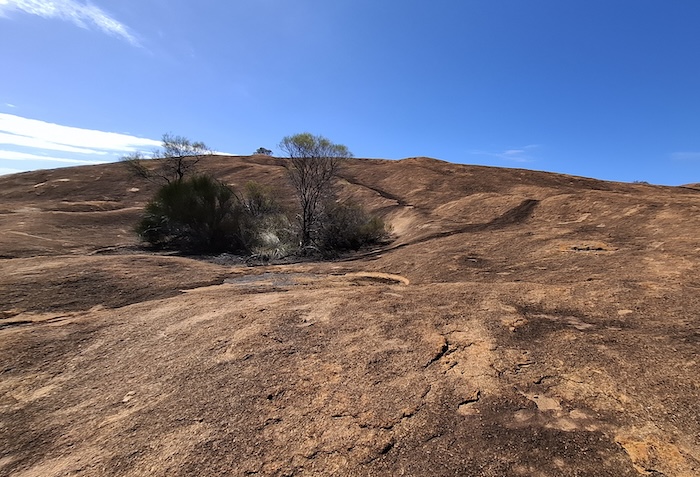
- Yanneymooning Hill.
Yanneymooning Rock is extensive. It covers an area of close to two square kilometres. While the access track covers numerous spots that lead to the rock it doesn’t circumnavigate it.
-
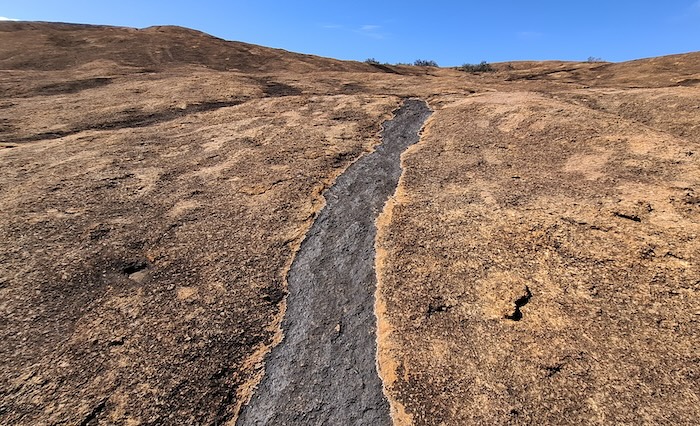
- Chemical staining at Yanneymooning.
-
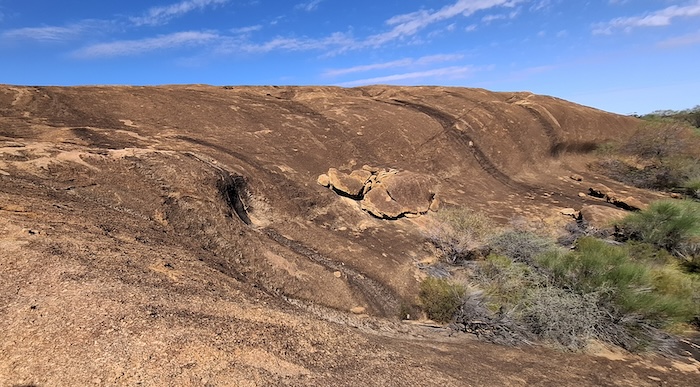
- The beginning of a wave at Yanneymooning Hill. Should be ready for tourists in about 3 to 5 million years.
Next stop was popular Elachbutting Rock.
Elachbutting Rock
We headed to Elachbutting Rock – arguably the most interesting of the hundreds of granite outcrops in the Wheatbelt. It is a popular camping and picnicking spot – and also the setting for numerous weddings over the years. Surveyor H.S. King first recorded the name in 1889. It is thought to mean ‘that thing standing’.
-
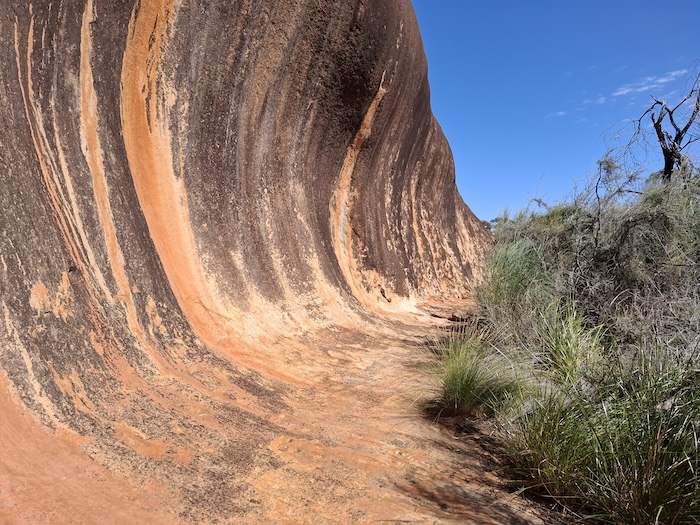
- The wave at Elachbutting.
-
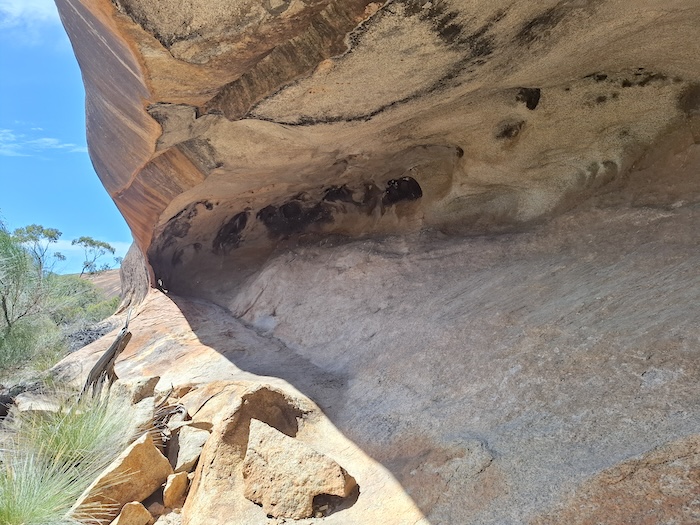
- Echo Cave.
-
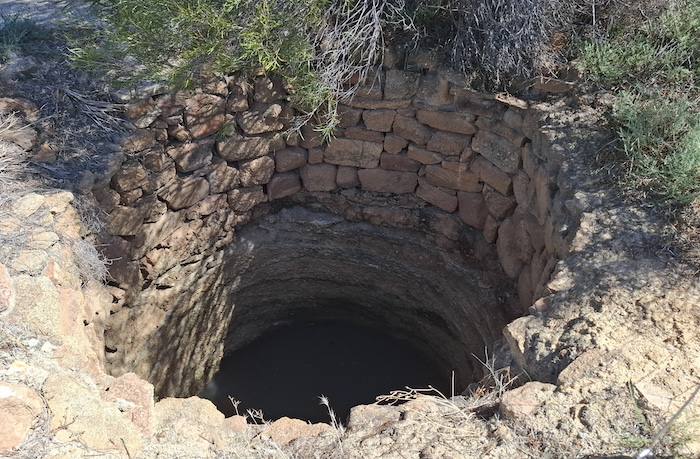
- Elachbutting Well.
-
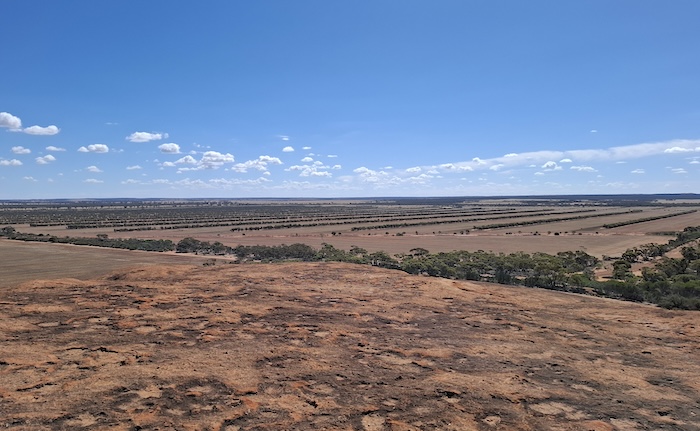
- A view of ‘alley farming’ from the lookout atop Elachbutting Rock.
Beringbooding Rock
Beringbooding Rock has the largest rock water catchment in Australia. Built in 1937 by ‘sustenance labour’, this tank holds more than 10,200,000 litres of water and cost £10,000 (about $1,500,000 in 2026). The story of how this came about makes for interesting reading.
-
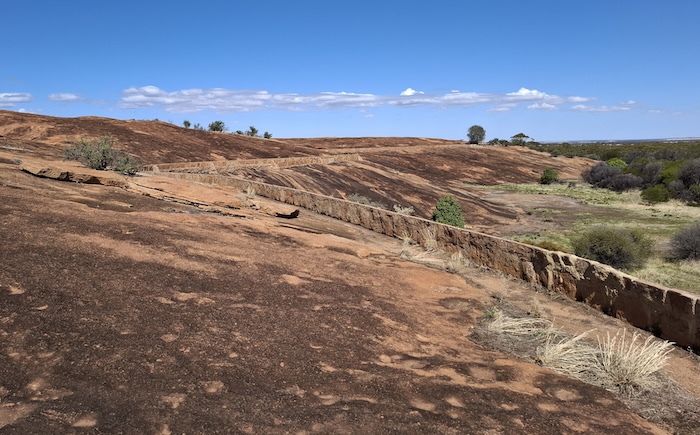
- Harvest wall at Beringbooding Rock.
-
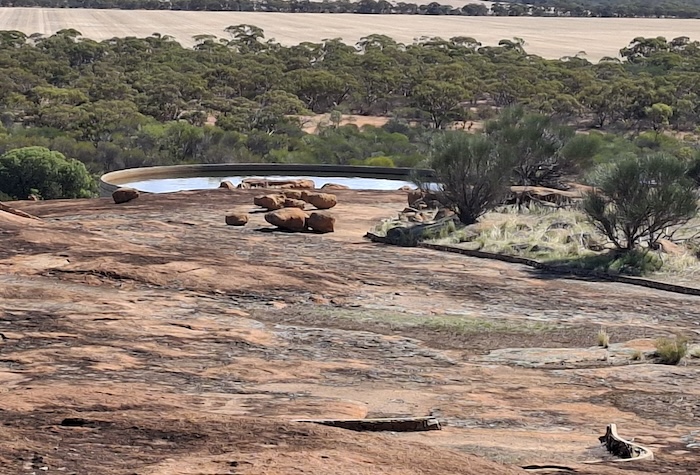
- The harvest walls direct the water into the huge reservoir tank.
-
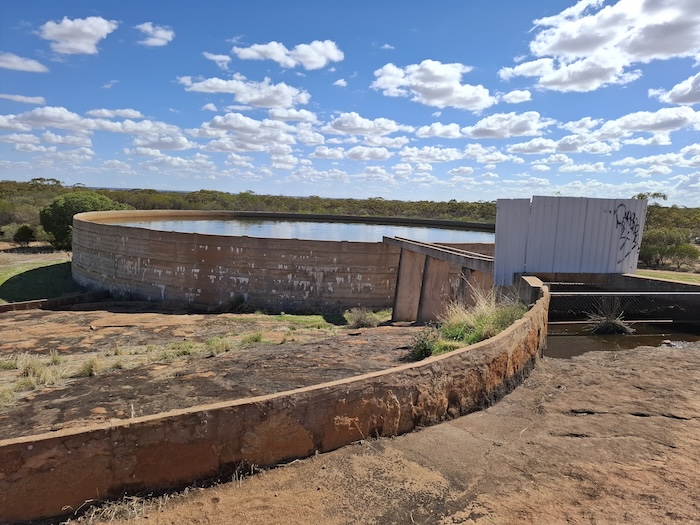
- The derelict roof has been removed from the tank.
We walked to the summit but decided against the full walk around the rock.
-
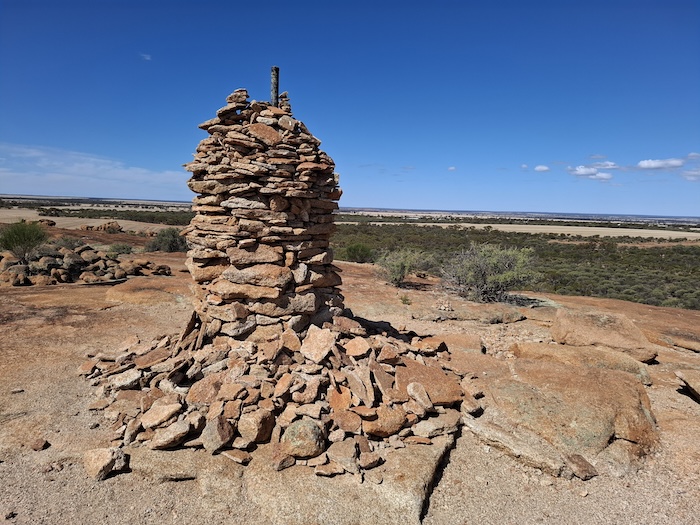
- Cairn atop Beringbooding Rock.
There are two drystone wells at the base of the rock.
-
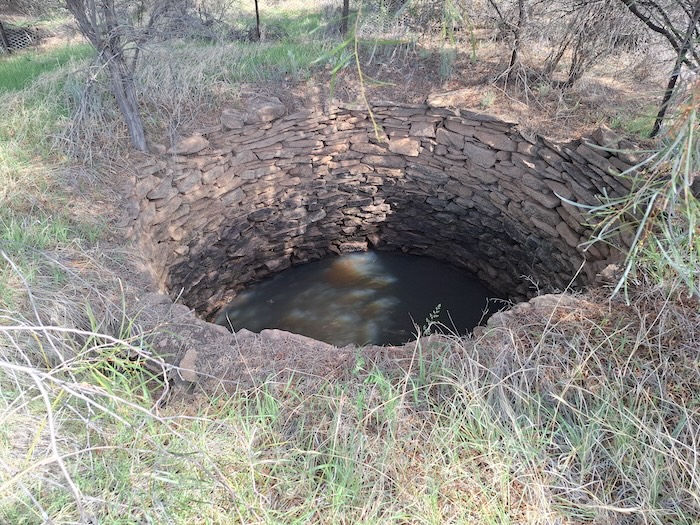
- Beringbooding Well No.2
We left Beringbooding for Bonnie Rock and on to Beacon, a focal point on the Wheatbelt Way.
Datjoin Rock
On the way to Beacon we visited Datjoin Rock. This area opened to pastoral leases in 1872. Datjoin Well was dug in the early 1900s by sandalwood cutters James and Edward Moran. The well was eventually timbered by the Public Works Department. When full it supplies approximately 800 litres of water. It is 45 metres deep with a good granite bottom.
Datjoin Well was an important source of water for families living in the Wialki area as well as a major watering point on the Wyalkatchem and Mt Marshall railway.
During the winter and spring months Datjoin Reserve is a popular picnic and tourist camp spot. Orchids and wildflowers are abundant.
-
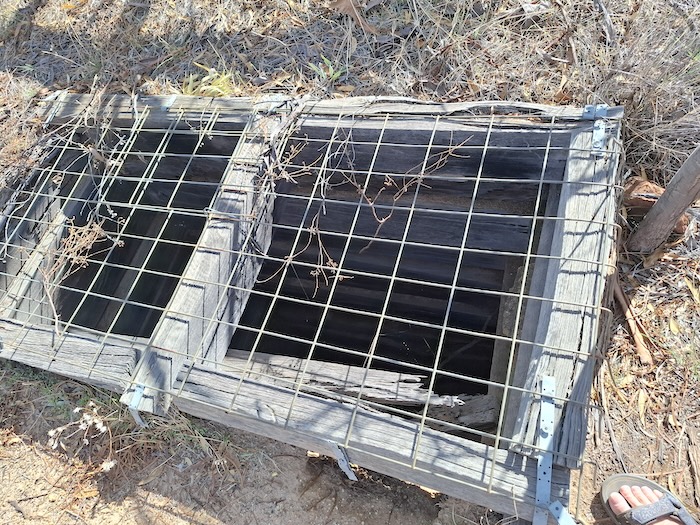
- Datjoin Well was dug by sandalwooders.
The rock achieved local fame in the 1971 when Lionel Brockman escaped from Wooroloo Prison and vanished in the back country of Western Australia, sparking off the largest and most expensive manhunt in the State’s history (at the time). While on the run he was accompanied by his wife and eleven of his twelve children. Recaptured, he escaped again a few months before he was due for release.
During his time on the run, Brockman and his family were known to have hidden out in areas north of Beacon, including Datjoin Reserve. Chickens and other animals went missing over the period of time that Brockman was hiding out in the area. Local farmers seemed to tolerate the missing livestock as Brockman was trying to provide for his family.
Wialki
What’s left of Wialki is mostly hidden from the main road. A drive through the abandoned streets was unexciting.
Beacon
There was a lot of activity in Beacon. Lots of people but it was difficult to see what was actually happening. Perhaps just the normal Sunday afternoon gathering in this small north-eastern Wheatbelt town.
We headed north out of town towards Billiburning Rock.
Billiburning Rock
This rock was an important water source for early settlers, however, it is used only by animals today. It was known as early as 1865. John Forrest replenished his water supplies here in 1869 before heading further north on his fruitless quest to find the lost Leichhardt expedition.
-
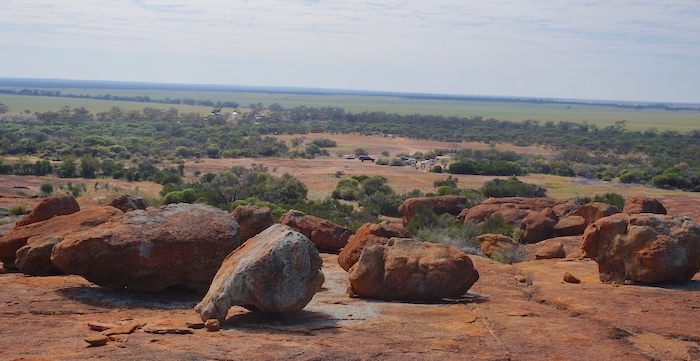
- View from Billiburning Rock.
There are a number of large camping areas at the rock.
Day 4
Tampu Well
Any number of vehicles could be accommodated at this large, level site close to the climate demarcation denoted by the State Barrier Fence.
-
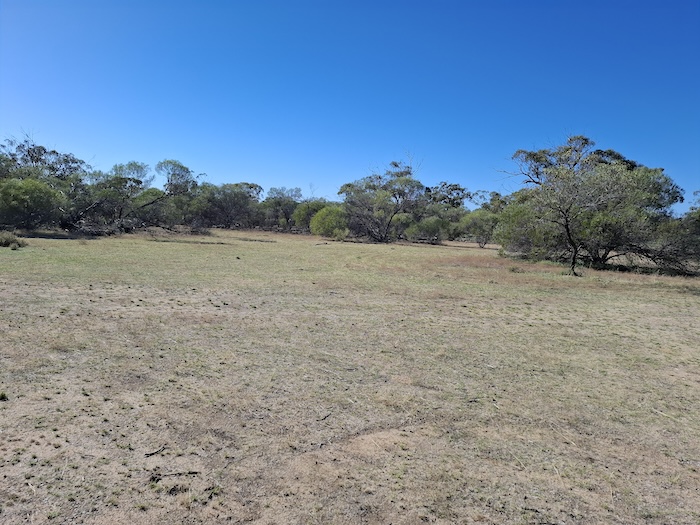
- Tampu Well Reserve offers many large, level campsites.
It is the site of an old Government well that was used by shepherds, sandalwooders and prospectors. The well is now derelict.
-
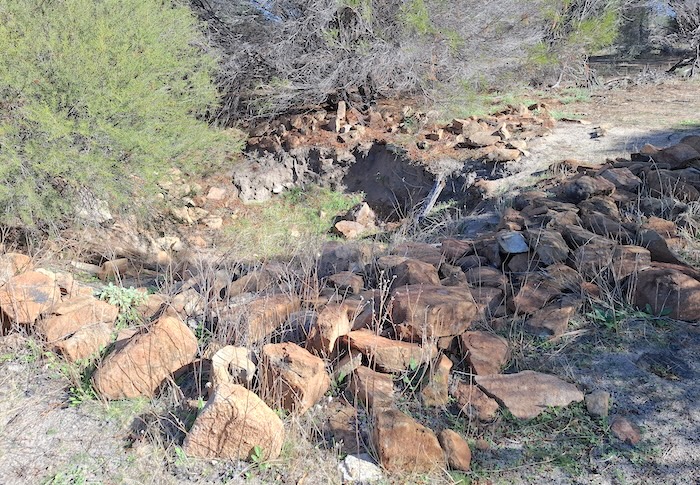
- The derelict Tampu Well.
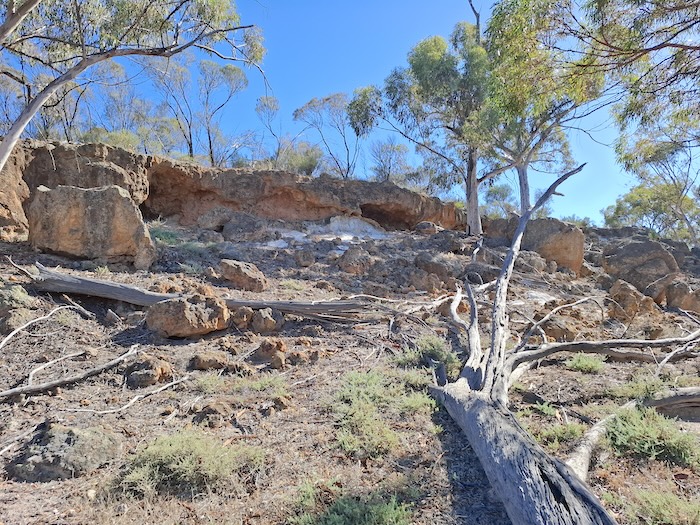
Beagley Breakaway
These interesting and extensive breakaways are on the Beagley Farm. The owner has generously made them accessible to all. The access track is suitable for all vehicles and leaves Bimbijy Road at the southern end of Tampu Well Reserve.
The breakaways extend for about three kilometres, most of is accessible by vehicle.
-
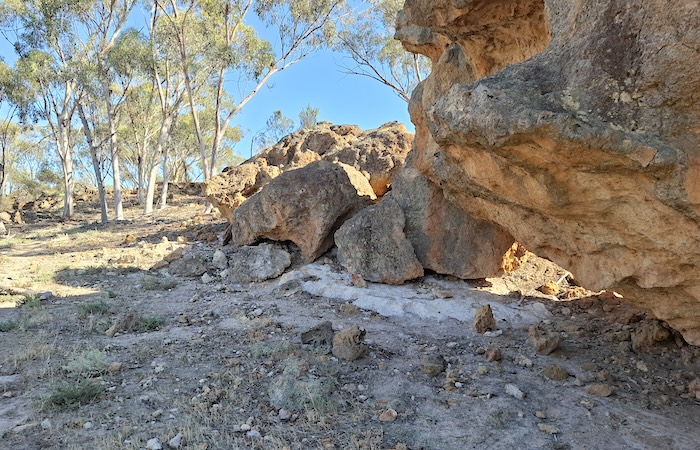
- Beagley Breakaway.
-
- Beagley Breakaway.
-
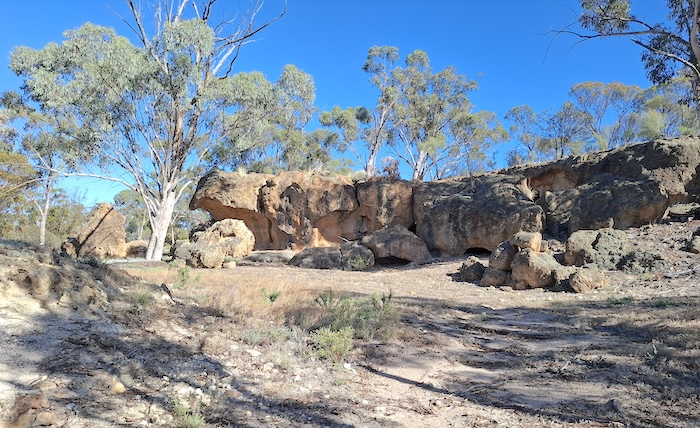
- Beagley Breakaway.
More information and photographs.
We made our way north off the property and onto a track that parallels the Barrier Fence (not the Barrier Fence access/maintenance track), eventually connecting with Maroubra Road.
It was in this area nine months earlier that Carolina Wilga, a 26 year old German tourist made international headlines when she was stranded for 12 days – eventually making her way to Maroubra Road. Harsh country but not deadly if basic precautions are observed.
We turned south on Maroubra Road, an important route that connects the north-eastern Wheatbelt to Paynes Find on the Great Northern Highway.
Cleary Rocks
The water harvesting system at Cleary Rocks is the most northerly we visited. It is very close to the northern limit of this part of the Wheatbelt.
The infrastructure at Cleary Rocks is hidden by vegetation, not visible from the road and similar to water collection schemes at other granite outcrops. Its existence was unknown and totally unexpected (to us).
-
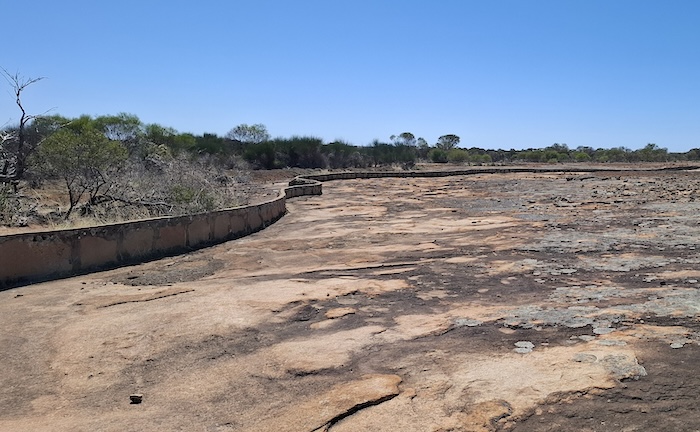
- There are kilometres of harvest walls at Cleary Rocks.
-
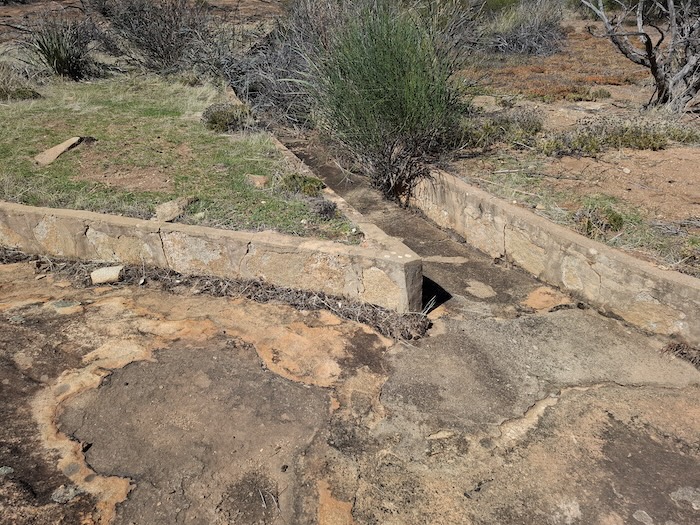
- The walls lead to channels that direct the water to a central collection point.
-
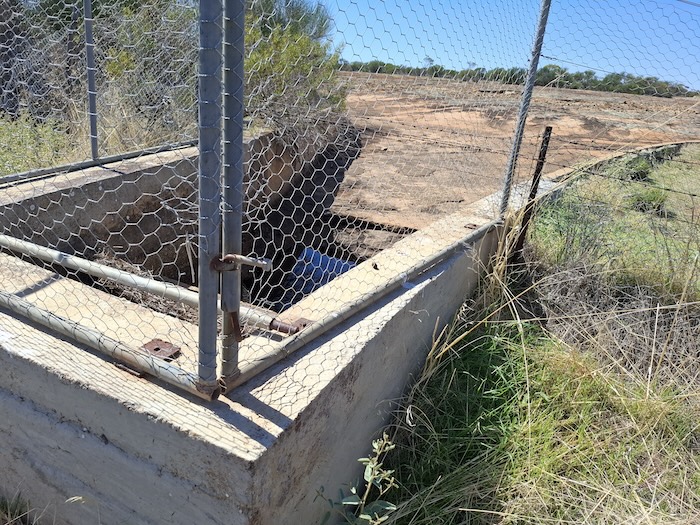
- Collector.
-
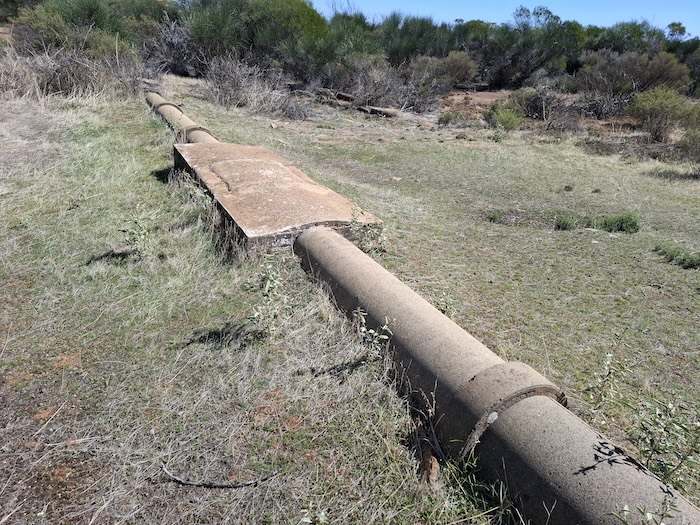
- A pipeline takes the water off the rock.
-
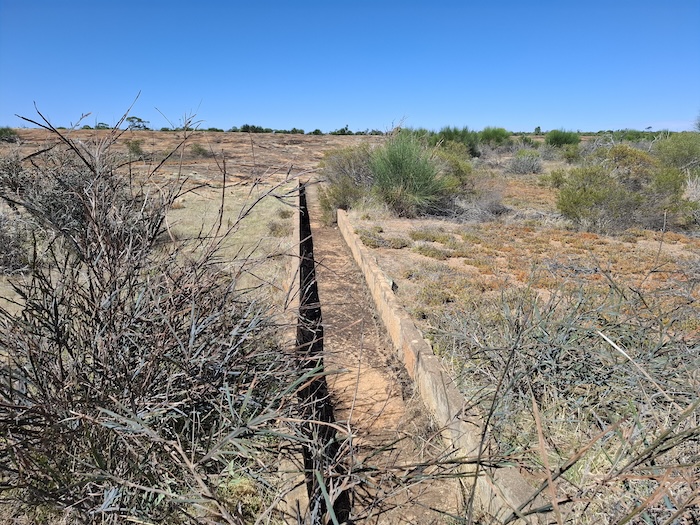
- Water channel.
We continued south to now-abandoned Mollerin.
Mollerin Lake
When the light is right the glistening surface water of Mollerin Lake is spectacular.
-
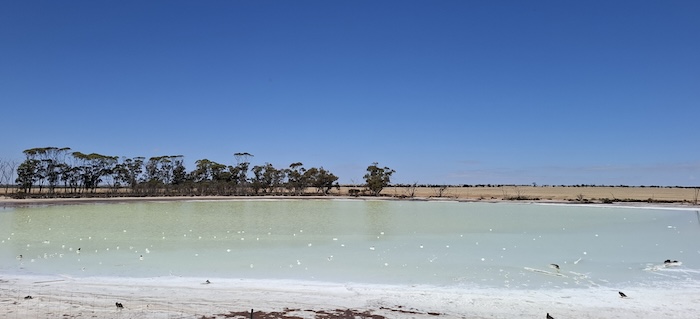
- The lake sparkles.
-
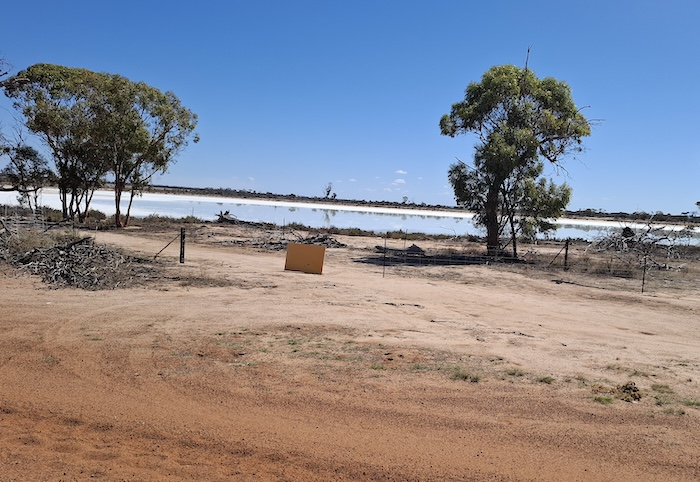
- It would appear that the lake is on private property.
Mollerin
Mollerin Campground is a large open area suitable for big rigs through to tent camping. Facilities include a shelter, fireplace and a waterless long drop toilet. The campground is immediately adjacent to the 12 acre (4.8Ha) Mollerin Rock. The extensive campground was formerly the community golf course.
-
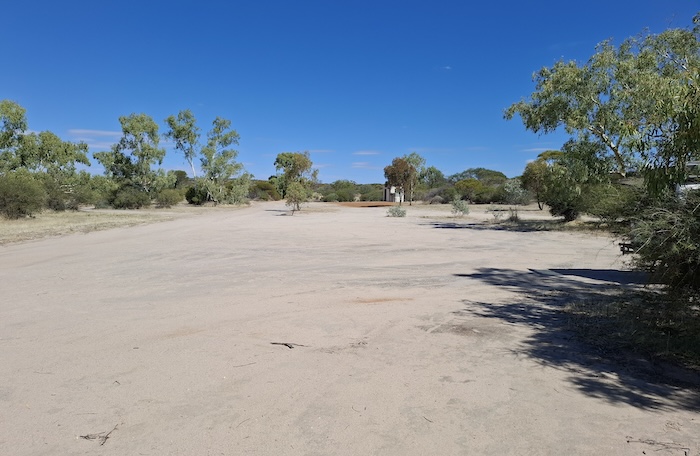
- A small part of the extensive Mollerin Campground.
-
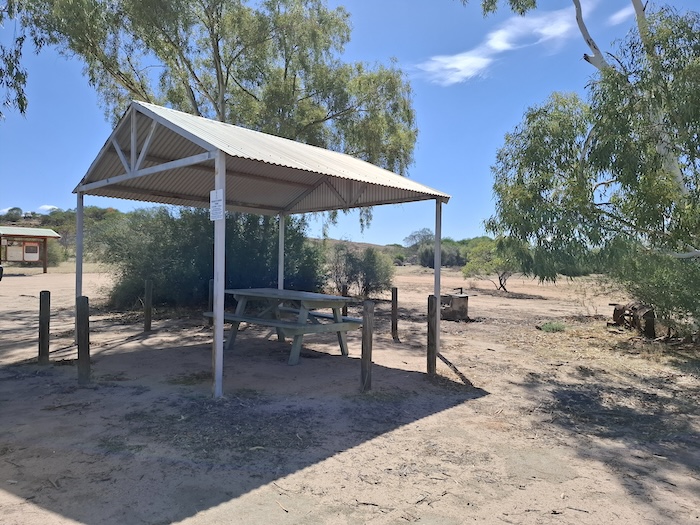
- Campground shelter.
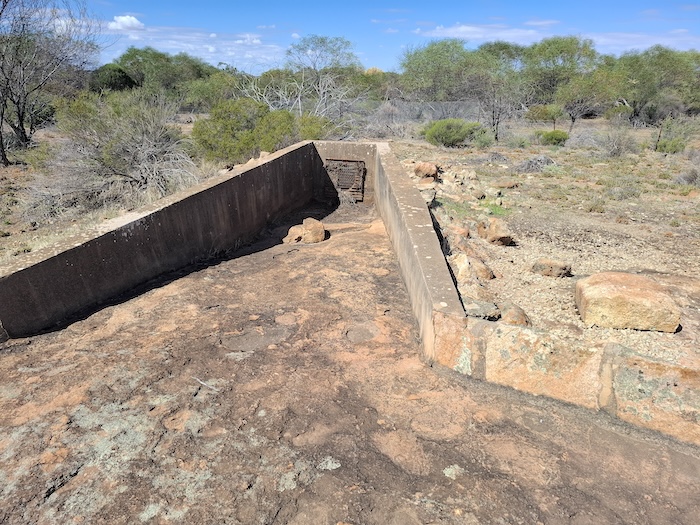
In 1928 a water harvesting and storage system was built by sustenance workers at the eastern side of the rock to supply essential water to the small town of Mollerin and surrounding farms. Harvest walls were constructed around the contour of the granite rock to channel runoff water into a collector and then into a pipe to a 775,000 litre concrete storage tank. At times water from the tank was carted into Koorda when that town’s supply became too low.
-
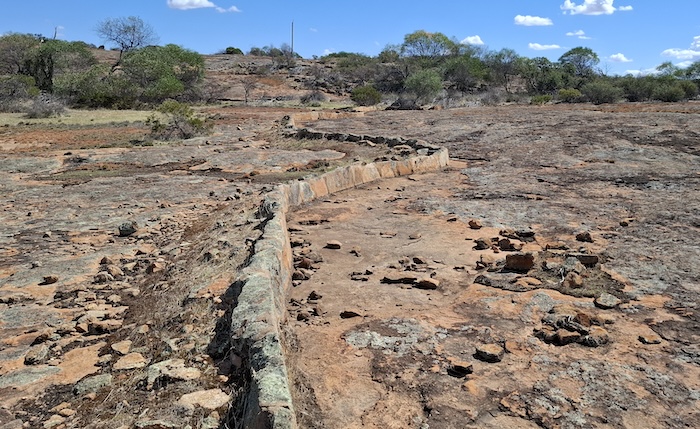
- Harvest walls direct the water.
-
- The harvested water flows to the Collector.
-
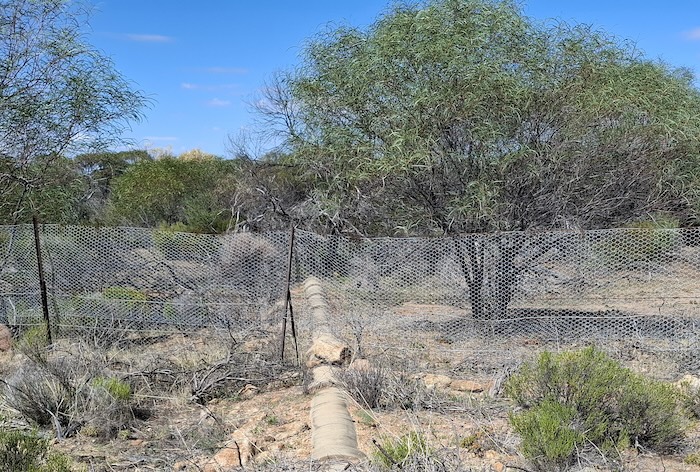
- A pipe takes the water to a storage tank.
-
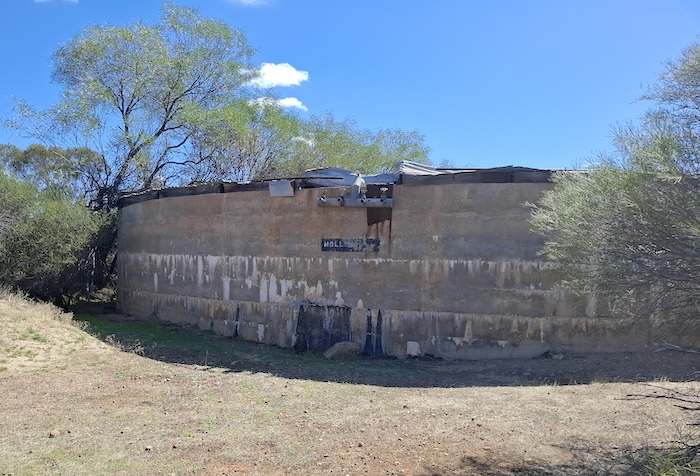
- The 775,000 litre, concrete storage tank.
The town of Mollerin is no more. All that remains is a large wheatbin and a commemorative plaque.
Newcarlbeon Rock
In 1905 settlers built a homestead at this granite outcrop to take advantage of a permanent soak and well at the bottom of the rock. The water enabled them to establish a garden and orchard, and keep household stock.
A dam was excavated in 1926, however, it was not until 1937 that a concrete tank was constructed at the northern base of the rock. Harvest walls channel the water into the 1,000,000 litre storage tank.
-
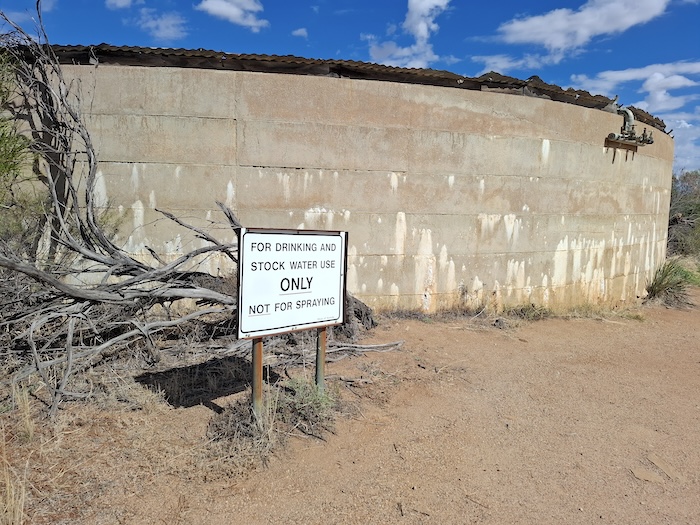
- Newcarlbeon water storage tank.
Newcarlbeon is renowned for its abundant display of wildflowers from late August through to mid-October, providing there has been good winter rains.
Camping at the rock is permitted and there is a gazebo, bbq facilities and a waterless long drop toilet.
-
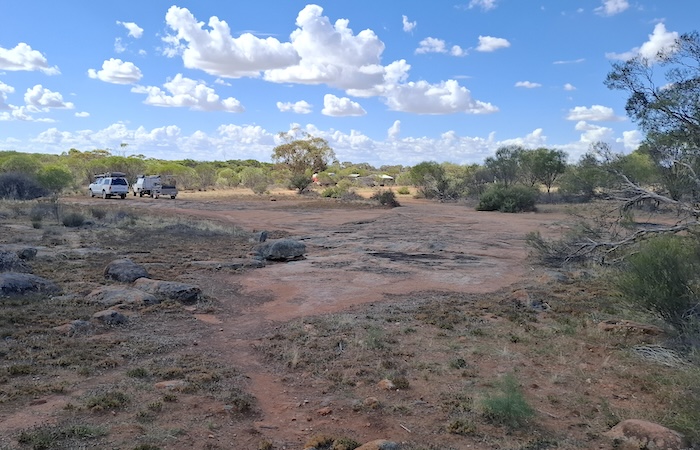
- Plenty of room at Newcarlbeon.
It is 57 kilometres to the small town of Bencubbin.
Bencubbin
-
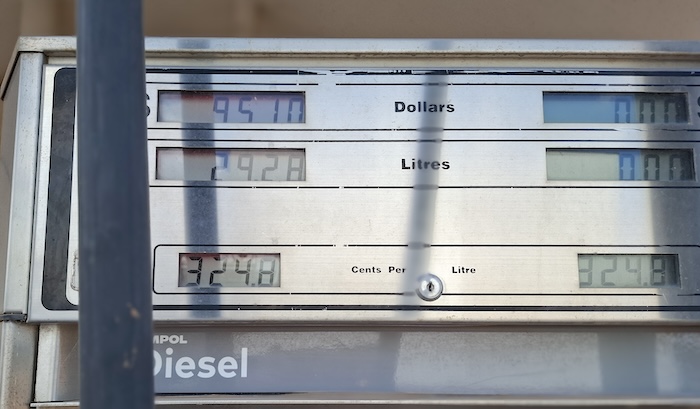
- Will this price for diesel be perceived as ‘cheap’ in the future?
After refuelling we made our way to the Bencubbin Caravan Park.
Bencubbin Caravan Park
Bencubbin Caravan Park was more like the accommodation area of a mine site than an overnight stopping place for travellers.
We set up our camp, sat back and prepared to enjoy the late afternoon/early evening and then it started.
First one truck, then another, then another. Eventually five trucks did a circuit of the park, found their designated spot and and parked up for the night. But not before idling down for ten minutes. That unexpected assault on the senses was topped off by the arrival of a water truck. The driver did a circuit of the park converting the dust into mud.
We wisely delayed our visit to the camp kitchen to let the road construction crew finish their meal preparations.
Day 5
Our crowded itinerary continued. We had to make the most of our increased fuel expenditure!
Marshall Rock
The Marshall Rock/Mount Marshall/Gardener Hill Campground is the most extensive free camp in the region. It’s difficult to see this facility ever getting close to capacity. There are many large open areas with plenty of shade. It is a magnificent resource for travellers.
-
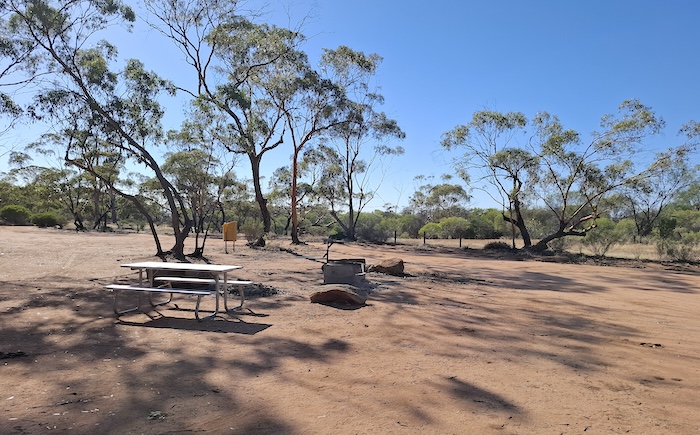
- There are many large open areas at Mount Marshall. However, the campground is at risk of becoming a dustbowl.
Unlike many monadnocks/granite outcrops, at Mount Marshall there is a track to the summit and a magnificent Viewpoint/Lookout.
-
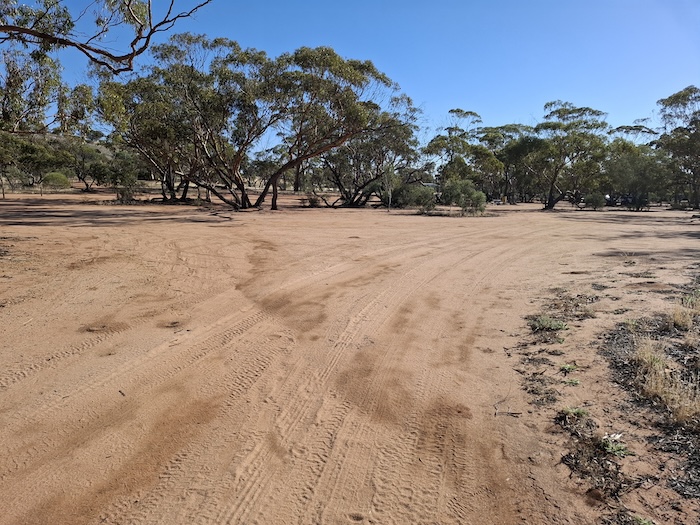
- This track leads to the top of Mount Marshall.
-
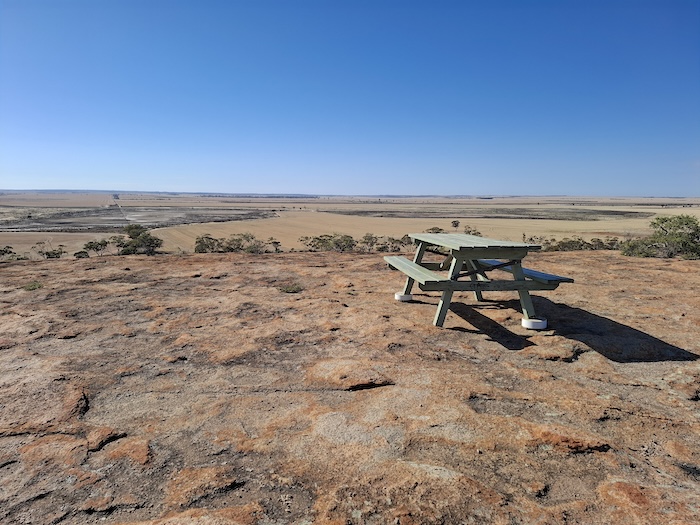
- Mount Marshall Viewpoint.
-
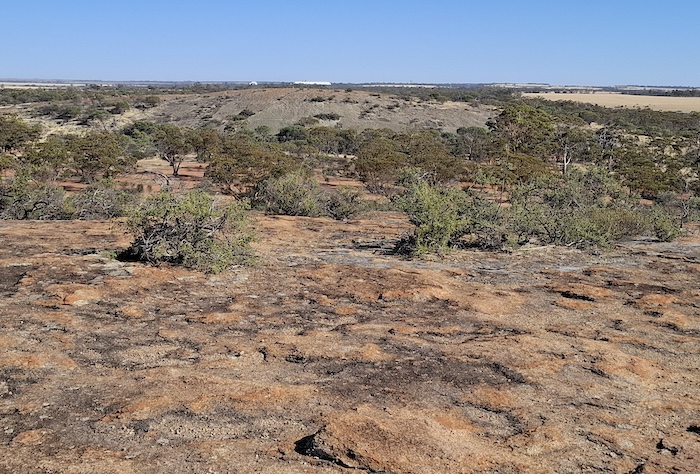
- Gardener Hill from Mount Marshall.
-
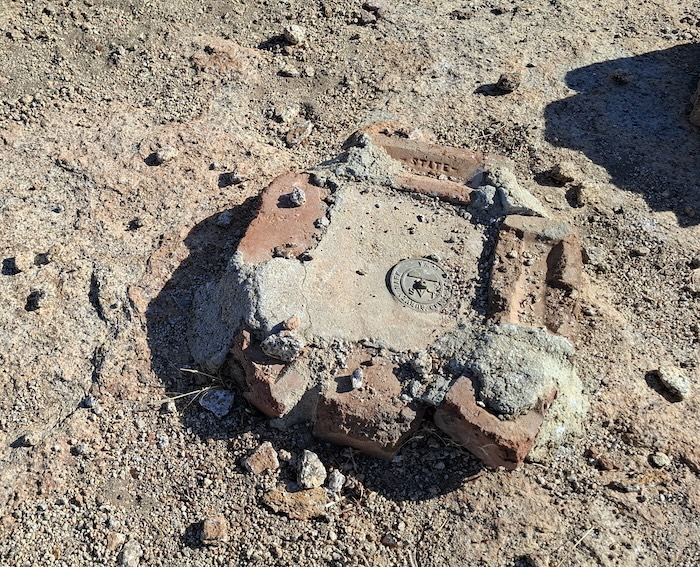
- Bench Mark – a survey marker.
As with so many well-known free campgrounds in Western Australia the Marshall Rock Campground is showing signs of over-use. It needs to be shut down for at least five years to allow it to be revegetated. Clearly that is not going to happen. A workable solution would be to close parts of the campground on a rotational basis.
-
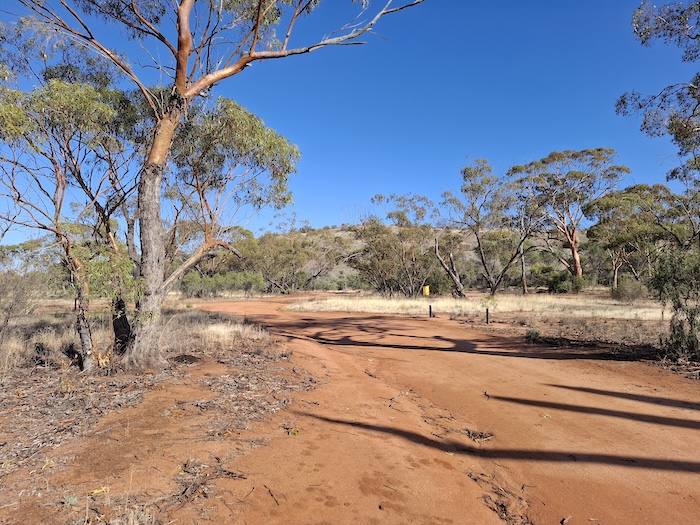
- This track leads to the Gardener Hill Campground. Having discrete camping areas facilitates rotational rehabilitation closing.
Pergande Homestead and Sheep Yards
The Pergande homestead and sheep yards were built in 1913.
-
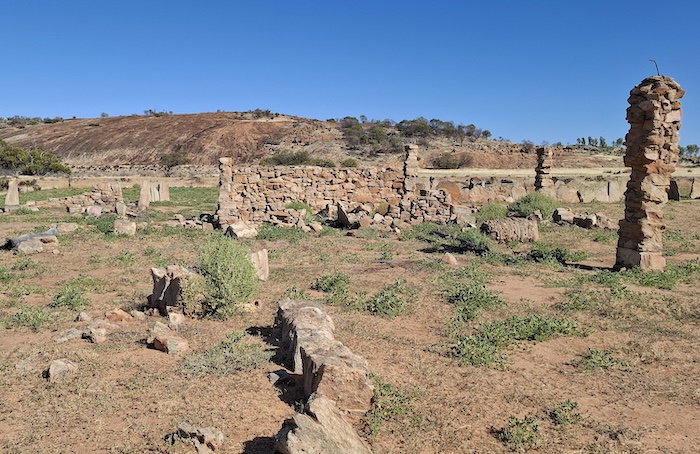
- The remains of the Pergande homestead.
The slabs for the Pergande Sheep Yards were taken from a nearby granite outcrop known as Wiacubbing Hill.
-
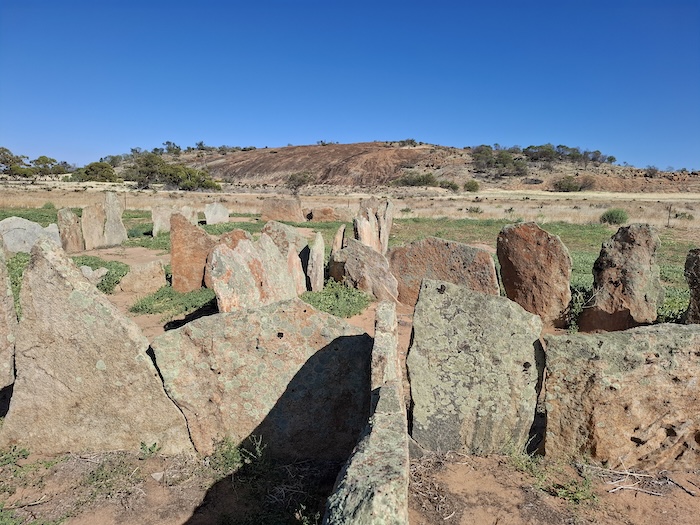
- Wiacubbing Hill in the background.
-
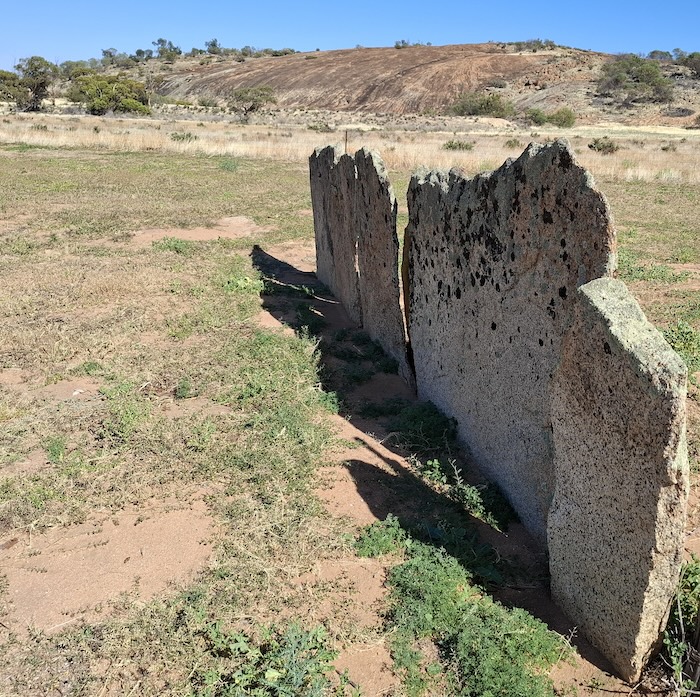
- Granite slabs.
The thin slabs of rock were quarried by heating the rock with fire and then cooling it quickly with water. This broke off thin layers of the granite that were used as fence slabs.
-
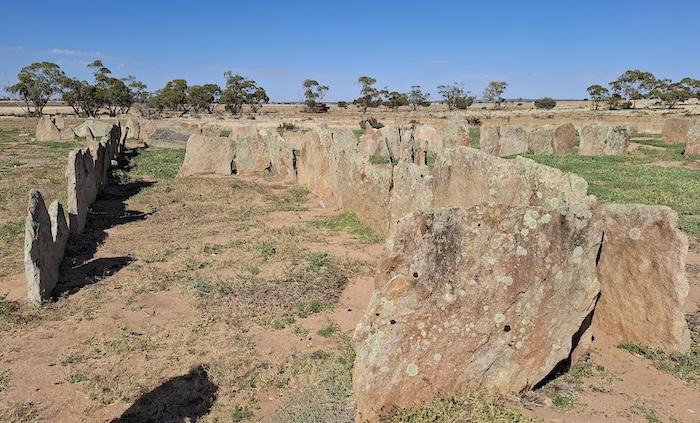
- Insufficient slabs remain standing to determine the size and shape of the sheep yards.
-
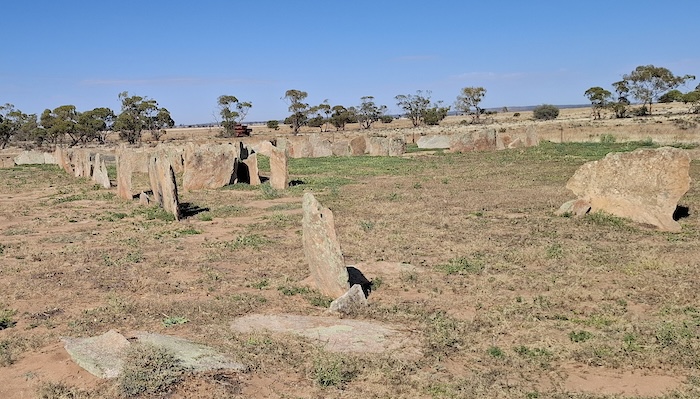
- Granite slabs quarried from Wiacubbing Hill.
Waddouring Dam
Waddouring Dam was definitely one of the highlights of the Road Trip.
-
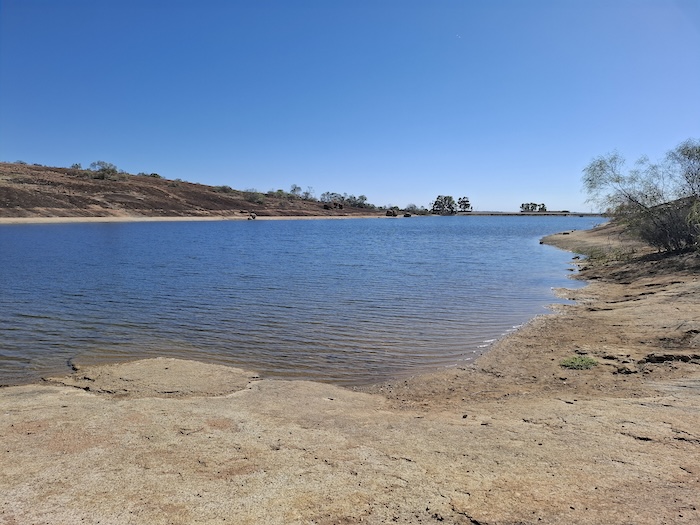
- Waddouring Dam.
Waddouring became known very early by nomadic pastoralists, shepherds and sandalwood pullers as a reliable watering place.
Public access to Waddouring Dam was restricted for many years as it was a vital water resource for the surrounding districts. In 2017, the Water Corporation completed the construction of a 6.25 million litre tank at the northern end of the Waddouring catchment. Once completed, the water from the dam catchment was no longer being used to provide scheme water to the district.
In 2020, the Shire of Mt Marshall entered into a lease with the Water Corporation for the majority of the reserve. The Shire has developed the site to once again allow locals and visitors back onto the reserve.
-
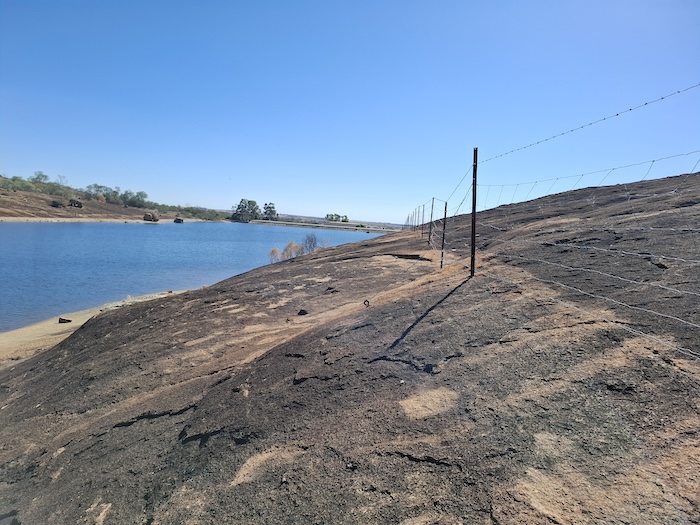
- Fence to keep out animals
-
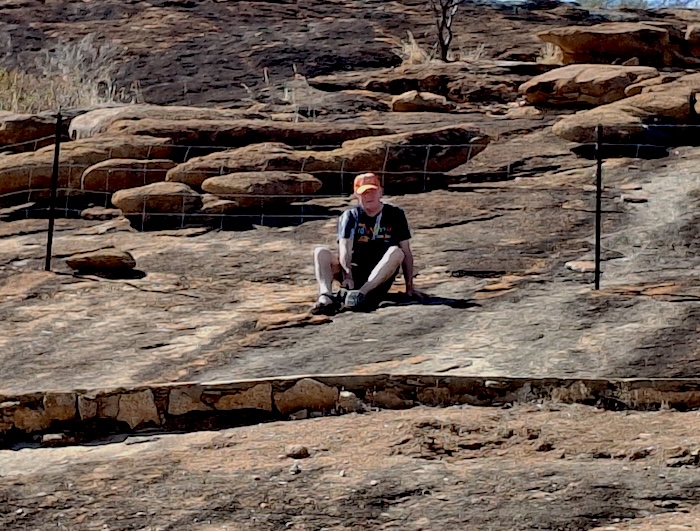
- Kim on the granite slope
-
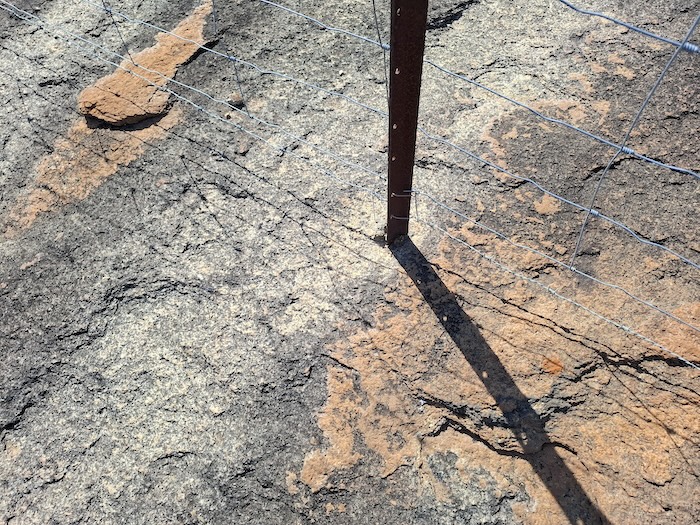
- Well-anchored star picket.
-
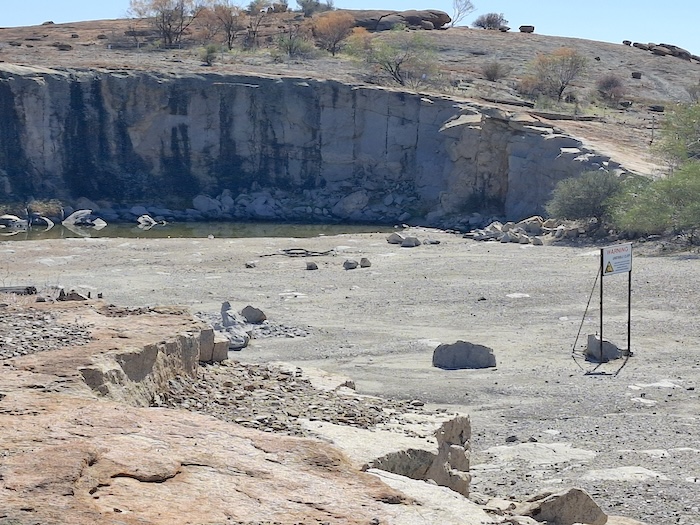
- The quarry from where the material was sourced to construct the dam.
There is limited camping room by the water’s edge, however, there are plenty of campsites, a waterless toilet and barbecues in the main campground (well signposted) 200 metres from the water.
Trayning Gnammas
Gnammas are commonly small in size and occur on bare rock, generally granite. They can be dry for extended periods.
-
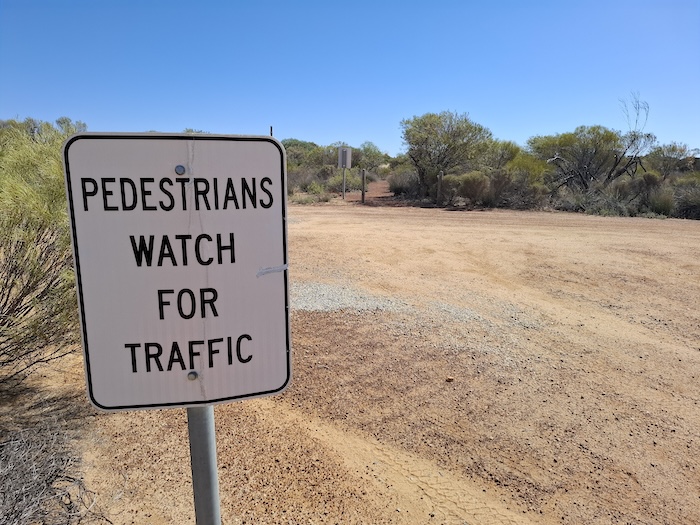
- The gnammas are on the opposite side of the road to the carpark. The path to the gnammas (can be seen middle top of the photograph) is not immediately obvious from the carpark – particularly if the rear of the vehicle is towards the access track. Some maps show the gnammas as south of carpark, whereas they are to the north.
The water in gnammas can support a variety of invertebrates – water fleas, small crustaceans, midge larvae, water boatmen, dragon-fly larvae and tadpoles.
-
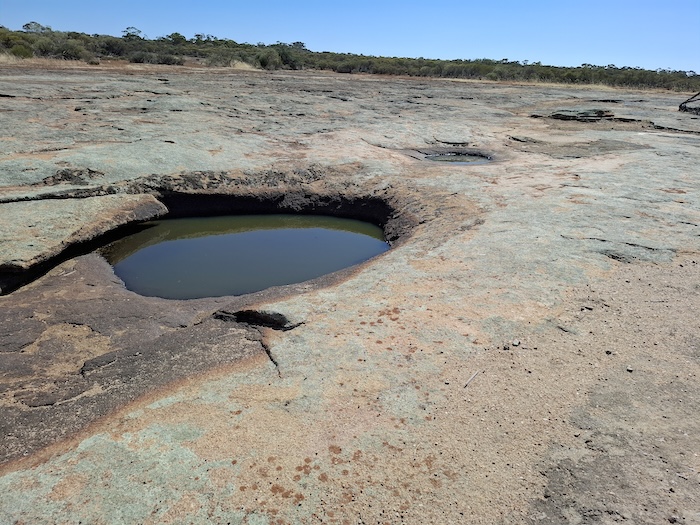
- Trayning gnammas.
Gnammas were valued by aboriginals, early explorers, pastoralists and farmers as they often were the only source of fresh water in this semi-arid landscape.
White Man Rock
This unusual quartz rock is accessed via Moujakine Road. Isolated, little known and little visited, White Man Rock has a seminal place in Western Australian goldfields history. It was here that the discovery of a small nugget of gold sparked off the Yilgarn Goldfields rush.
The historic Moujakine Well, at the same location as White Man Rock, was being cleaned out in 1887 when the nugget of gold was found.
-
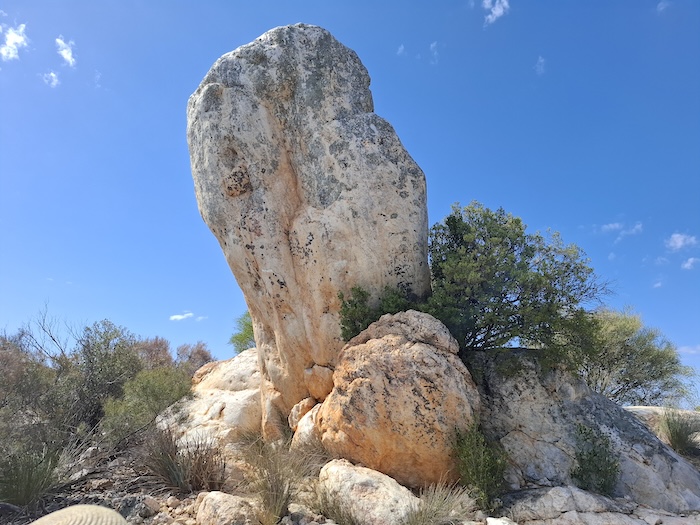
- White Man Rock, Moujakine.
Almost immediately prospectors were engaged to investigate further, leading to the discovery of the Golden Valley goldfield.
There is no signage, no interpretive board, no recognition to those who found the nugget. Perhaps, being private property, it is the preference of the owners. Maintenance costs from increased visitation would be a impost unfair to the owners, or even the local government authority if it took on the responsibility of maintaining the site.
-
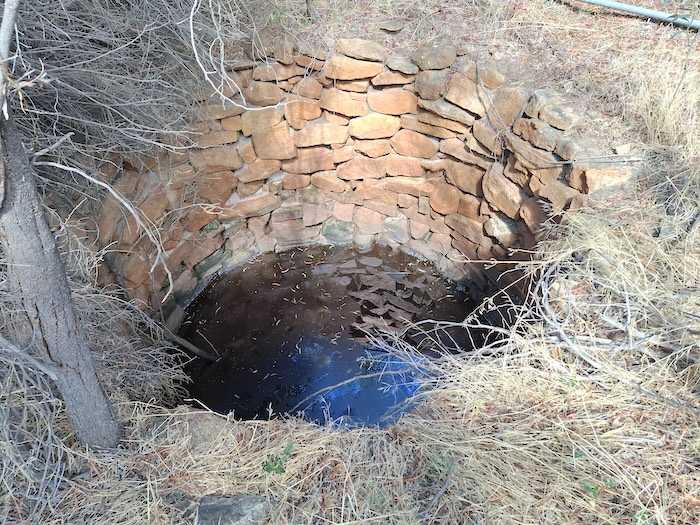
- Moujakine Well.
Moujakine Well is an important point on the Parry Track and it is to be hoped that travellers following the Track are more invested in its preservation than a casual visitor and would have minimal impact.
Trayning Well
In 1867 the place was described as:
“Good supply of water at present, but not permanent. It is a tank excavated in ground, 10 feet in diameter by 14 feet deep, stoned up with stone and covered with saplings. A small gully is turned into it, which fills it whenever a thunderstorm occurs. This could be improved by enlarging; very good place for a tank.”
In 1869 John Forrest rendered the local aboriginal name for this water source as Trayning and, given he was on an official Survey Office expedition at the time, the name was retained.
This well was used by early surveyors, pastoralists and goldseekers on the Yarragin Road to the Yilgarn Goldfields.
-
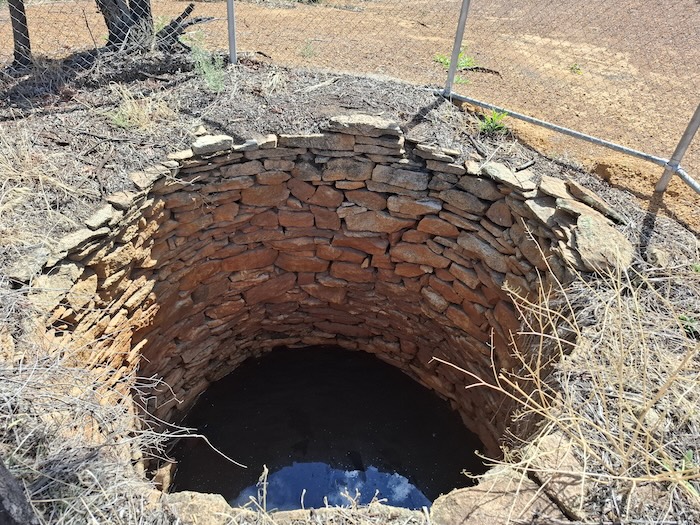
- Trayning Well.
Wyalkatchem
-
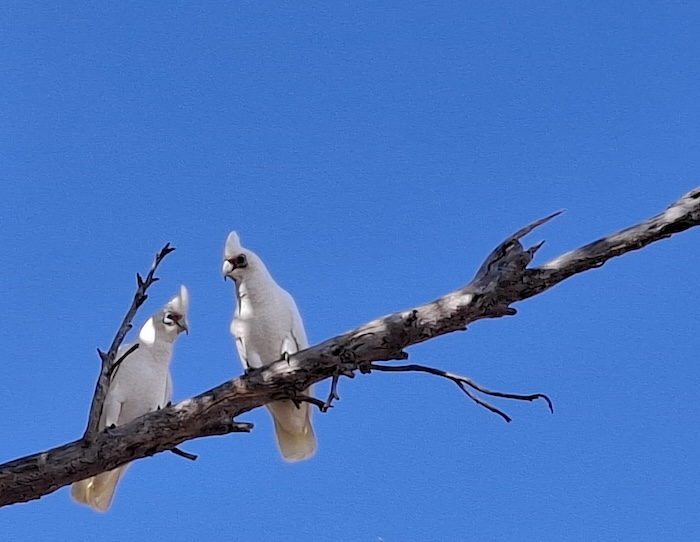
- Western Corellas at Wyalkatchem.
Namelcatching Well
Namelcatching Well (in Namelcatchem Reserve) was built sometime before 1865. At the request of Charles Adams, a stonemason for the Toodyay Roads Board, it was gazetted as a stopping place for teams. The well supplied water for early explorers such as John Forrest.
The discovery of gold in the Yilgarn in 1887 led to considerable traffic along the track that ran past the well. Just as it was an important water source for prospectors heading to the Yilgarn goldfields it was also vital for the horses and camels transporting passengers and supplies.
-
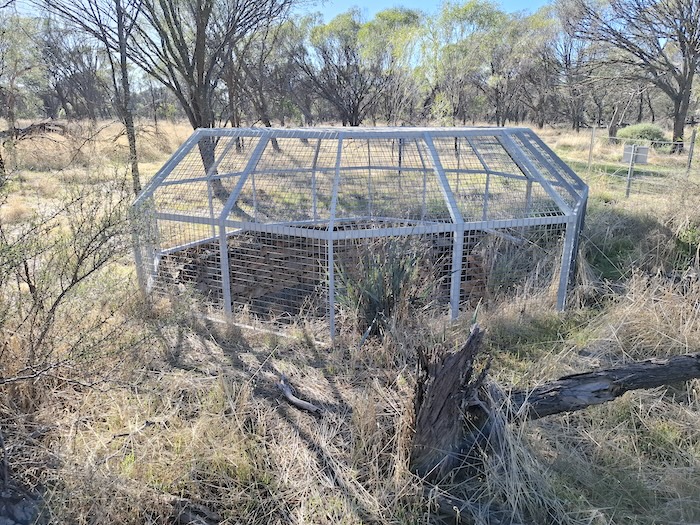
- Namelcatching is the best protected historic well in the Wheatbelt. Excellent protection while allowing safe viewing. The ‘cage’ prevents animals and most vegetation from falling into the well, although erosion is becoming apparent near its base.
After the railway line from Dowerin to Korrelocking opened in 1911, Namelcatching Well became an important watering place for horse teams that transported wheat to Minnivale rail siding.
As motor transport took over the task of transporting grain the need for water diminished and Namelcatchem is now a picnic spot and nature reserve vested for the purpose of protecting flora and fauna.
From Namelcatchem we headed to nearly-abandoned Minnivale.
Minnivale
Our last night of the Road Trip was at Minnivale. The first farming land here was selected in 1905.
-
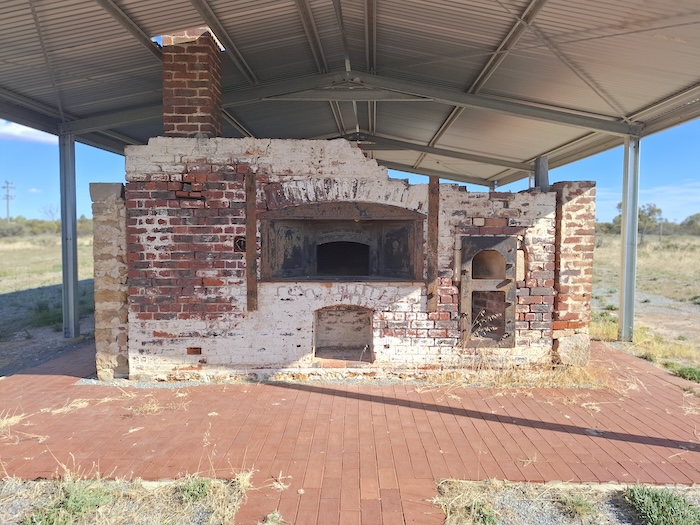
- The remains of the historic Minnivale Bakery are now protected.
Farmer Samuel Lynn, trained as a baker, bought the Goomalling Bakery with his sons in 1927.
In 1934 the family bought the Dowerin and Minnivale Bakeries, launching a baking dynasty: Alfred ran the Dowerin Bakery, Alan ran the Minnivale Bakery alongside his father Samuel, Robert ran the Cunderdin bakery, and Lewis baked at York.
-
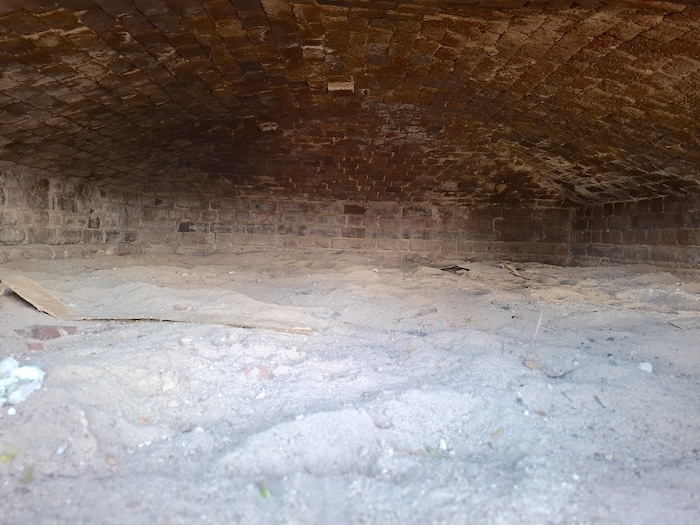
- Inside the Minnivale Bakery oven.
Each Sunday night, Samuel and Alan Lynn packed bread from this bakery into tea chests, tacked hessian bags over the top, and carried it to the Amery siding for transport north to the sidings at Burakin and Kulja, and east to Gabbin. Alan also delivered bread to outlying farms at Benjaberring and Booralaming, and collected flour from Thomas & Co. in Northam — the same mill that still stands on the bank of the Avon River today.
By 1963 the time for small country bakeries was past. The Lynns left Minnivale, and the bakery and oven fell into disrepair. The house and shop were later demolished, but the oven remains — a reminder of the social history once shared by every small town in rural Western Australia.
-
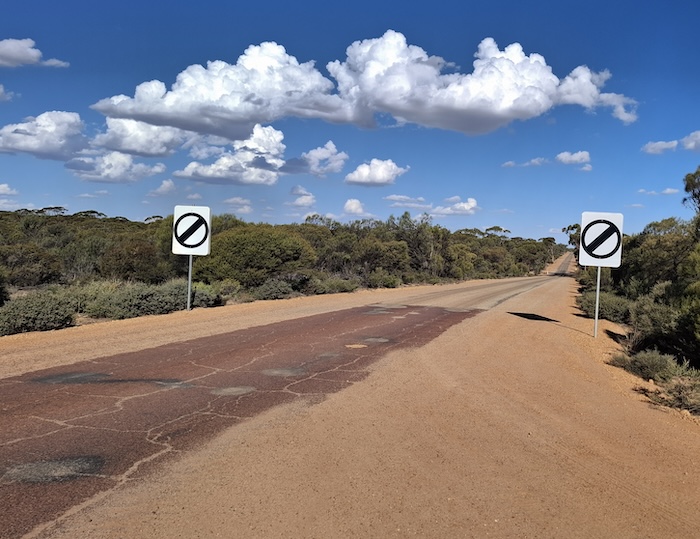
- Change of speed limit signs at Minnivale. These signs denote that the previously posted speed limit no longer applies and the road reverts to whatever the default speed limit is. I have never understood why a sign denoting the desired speed limit – generally 110km/h where these signs are seen – is not erected..Same effort, same cost and eliminates doubt.
Day 6
Our Road Trip essentially finished at Minnivale. It was a straight run home with only a break for coffee at Goomalling.
The Granite Outcrops of the Wheatbelt Road Trip was in April 2026 during the fuel crisis caused by the closure of the Strait of Hormuz. The cost of diesel was at an all time high. Is this the beginning of the curtailment of the Road Trip or will high fuel prices just become the ‘norm’?
Distance 1300 kilometres.
Road Trip 1015 – Granite Outcrops of the Wheatbelt.
Download the GPX Files.
Jandakot to Danberrin
Danberrin to Mukinbudin
Mukinbudin to Billiburning
Billiburning to Bencubbin
Bencubbin to Minnivale
Minnivale to Jandakot
See also:
Wheatbelt Wildflower Tour
Granite Monsters
Granite Skywalk
Granite Outcrops
© Kim Epton 2026
4052 words written entirely by the author, not AI.
83 photographs, one image.
You are welcome to use any part of this document. Please attribute adventures.net.au — it will help your site’s SEO as well as that of adventures.net.au
See Terms of Use.