
The Wattoning Historical Site
Wattoning is a significant historical settlement. The Historical Site includes wells, the homestead site and soak, gnammas, and a graveyard. The Wattoning graveyard has two infants buried there, and is the resting place of an early settler.
The area was first leased in 1873 by Charles Adams and James Ward. Both men had been shepherding sheep throughout the region and were well aware of good feed locations and watering places.
In 1882 Mr Dempster applied to purchase 100 acres (40Ha), including the well and gnamma. This did not include the Wattoning Homestead, which had been built in 1873 by James Ward, and was just outside the 100 acre block.
Over the years, other settlers came to the region and the gnamma and wells provided precious water for them, and for travellers.
In later years a Syndicate Shearing Shed and shearers quarters were built to pool resources and save money. The shearing shed is on private property and is still in use today.
Wattoning Homestead.
The Wattoning Homestead was built in 1873 by James Ward where he continued to live until 1890. After this Mr Alfred Ives lived at the homestead until Mr F.H. Hall took over in 1903.
The site of the homestead is slightly to the north of the Information Area at the site. The thatched homestead, with its 360mm thick mud brick walls had a large kitchen and dining room, living room, several bedrooms and a separate laundry/storeroom block. Lanterns provided lighting, the large kitchen stove had water bins each side and the aboriginal workmen kept the large wooden casks outside the kitchen, dining room and laundry filled with water that came from the gnammas nearby.
-
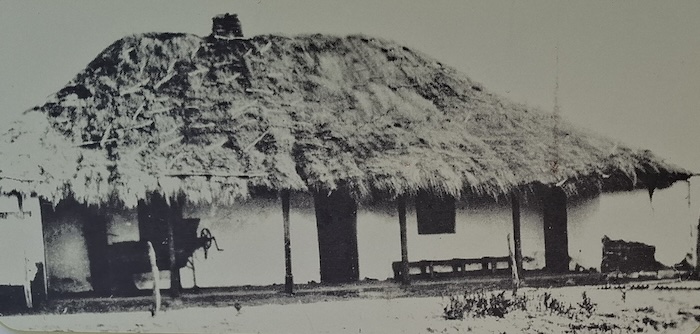
- Wattoning Homestead
Wattoning homestead was burnt down some time after July 1911, as Mr Arthur Corunna made mention of seeing the house in July 1911 while on his way to the Datjoin Creek with cattle for Con McCorry of Nungarin during the drought of that year. However, the homestead was no longer there when Mr Albert Shadbolt came to the area later in 1911.
For some years after the Halls moved away, the homestead was used as a camp by sandalwooders who would pull the wood in the bush then bring it back to Wattoning for cutting and cleaning. In the 1930s there was still a large pile of sandalwood chips at Wattoning site. It is believed that the thatched roof house was gutted by fire at some time after the 1930s.
Surviving life on Wattoning Station
Life was harsh in the early years and settlers relied on a good garden to supplement their food. During the Ives’ occupation of the homestead, an excellent garden was tendered by Mr Ives’ brother, Fred, who grew excellent vegetables in season. No stone fruit were able to be grown but lemon and orange trees were successfully raised. Apple were attempted to be grown with little success. Almond trees were planted by Mr Dempster.
The Ives employed governesses to educate their children. The eldest of George Lukin’s children were brought across to Wattoning several days each week for schooling with the Ives children. The storeroom was used as the classroom.
Mrs Ives employed a Chinese cook – Ah Ling – and she also owned a piano, so when neighbouring station owners visited, music was a part of the proceedings. Visits were made by the Lukins from Wilgoyne and the Leeders from Dandanning.
On these social occasions sport would be played by young and old, horse races, a game of cricket, or tennis on the Wattoning Court.
Not all station life was as gracious as that at Wattoning where living was made easier by Mrs Ives’ good financial position. There is much evidence that life was not as easy for the next occupants, Mr F.H. Hall and his family.
Amongst the visitors to Wattoning was a famous German Goebel botanist who was in Western Australia from October to November 1898. During his visit some unusual everlastings and many other wildflowers were found. He made special mention of the Everlastings.
Wattoning Wells
Wattoning was fortunate to have a gnamma, situated across the road from on the granite rock. Most gnammas are naturally formed, however this gnamma in the fault line in the rock was made by local aborigines.
-
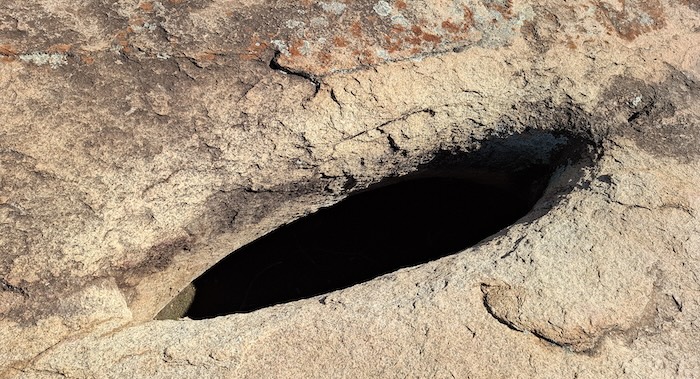
- Gnamma at Wattoning.
The early pastoralists constructed two dry stone wells and a soak at Wattoning.
In 1894 it was noted that there was a splendid road from Yarragin via Wattoning to Mount Jackson past the Wattoning homestead with an abundance of grass, plenty of water in the rocks and permanent water at wells and soaks.
After failed attempts to obtain a roadside dam about 10 kilometres north of Mukinbudin, improvements were made to the Wattoning Well. An inspection in September 1925, described the well as an oblong wood and stone lined soak tank. The tank measured 10 metres x 4.3 metres x 2.3 metres.
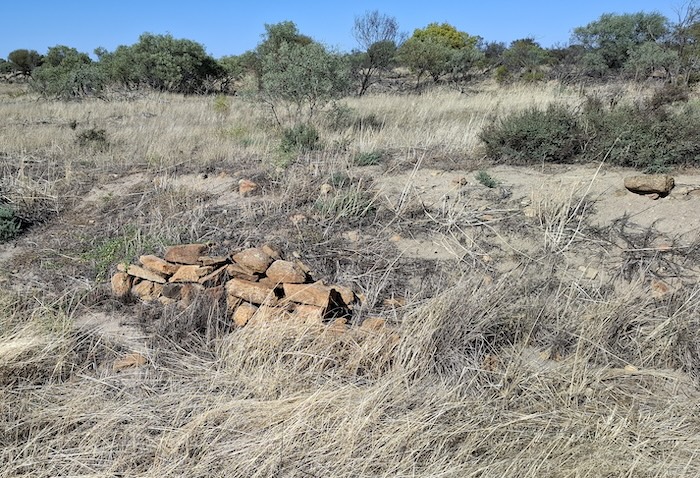
Near to the tank was a round soak tank two metres in diameter and 2.75 metres deep.
-
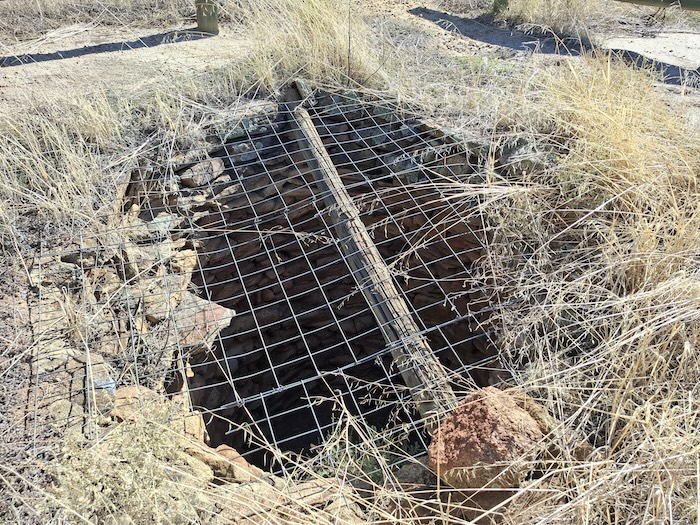
- Wattoning Well
The large tank derived its water partly from the surface of a nearby flat granite rock about three quarters of acre in extent and partly through the process of subduction (known colloquially as soakage). Water from this tank soaked into the smaller round tank and from there it was carted by the settlers. It was roofed with wire netting and saplings.
© This format Kim Epton 2026
914 words written entirely by the author, not AI.
Three photographs.
You are welcome to use any part of this document. Please attribute adventures.net.au — it will help your site’s SEO as well as that of adventures.net.au
See Terms of Use.